TSK-000022 · Action
Coordinated Centrifuge, Automated-CIP, Utilities and Controls Integration for Upstream Wine Clarification; Developed the Intra-Plant Transfer-Loop Scope
Wine Clarification and Vinegar Polishing Modernization
 APOLLO AUTOMATIONJAMES WARREN · ENGINEERING & PROJECT LEADERSHIP
CASE-016 · Workstream overview
An overview of the related projects, technical interfaces and outcomes within this workstream.
Project scope and individual work packages are presented separately; project totals are not additive to their component values.
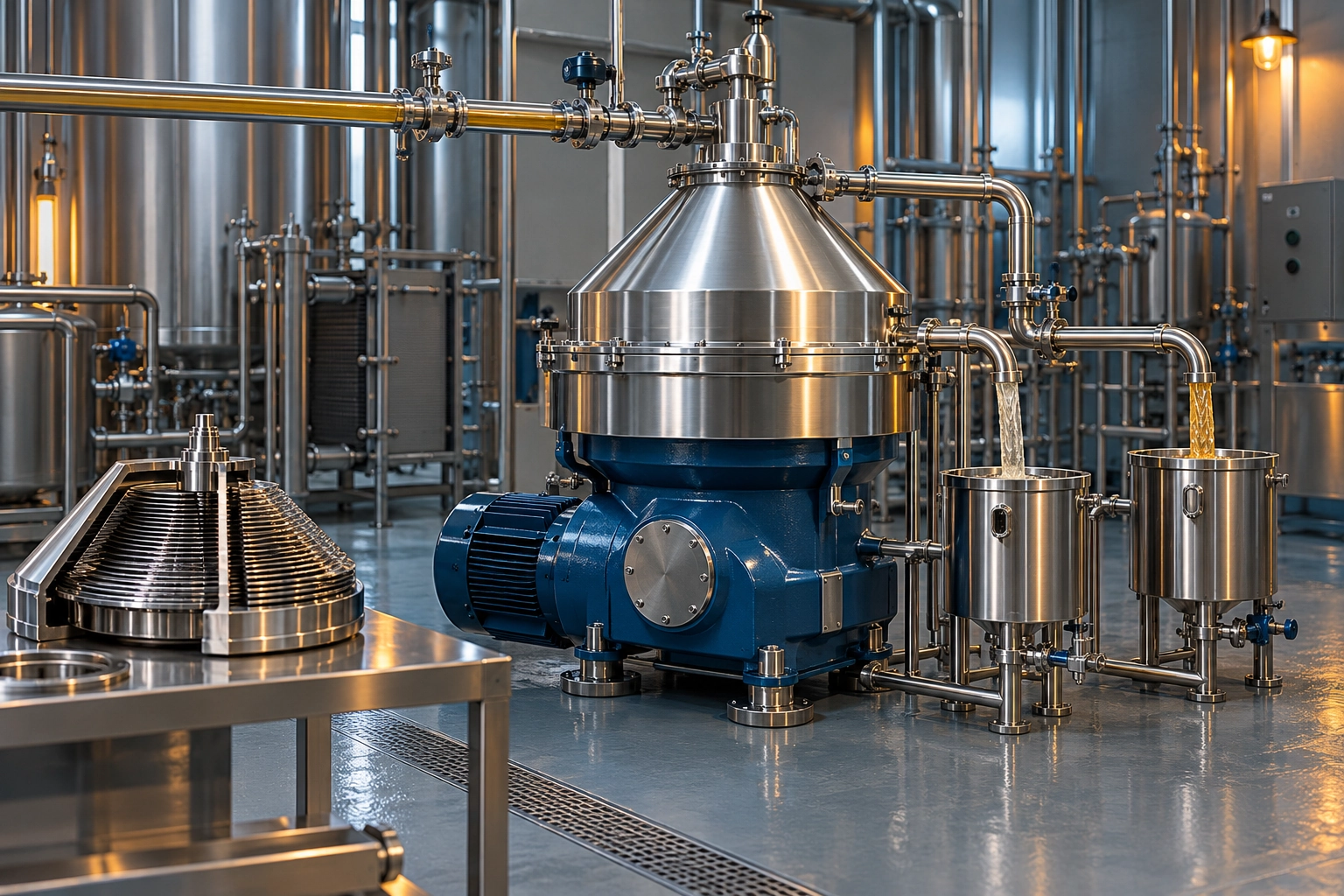
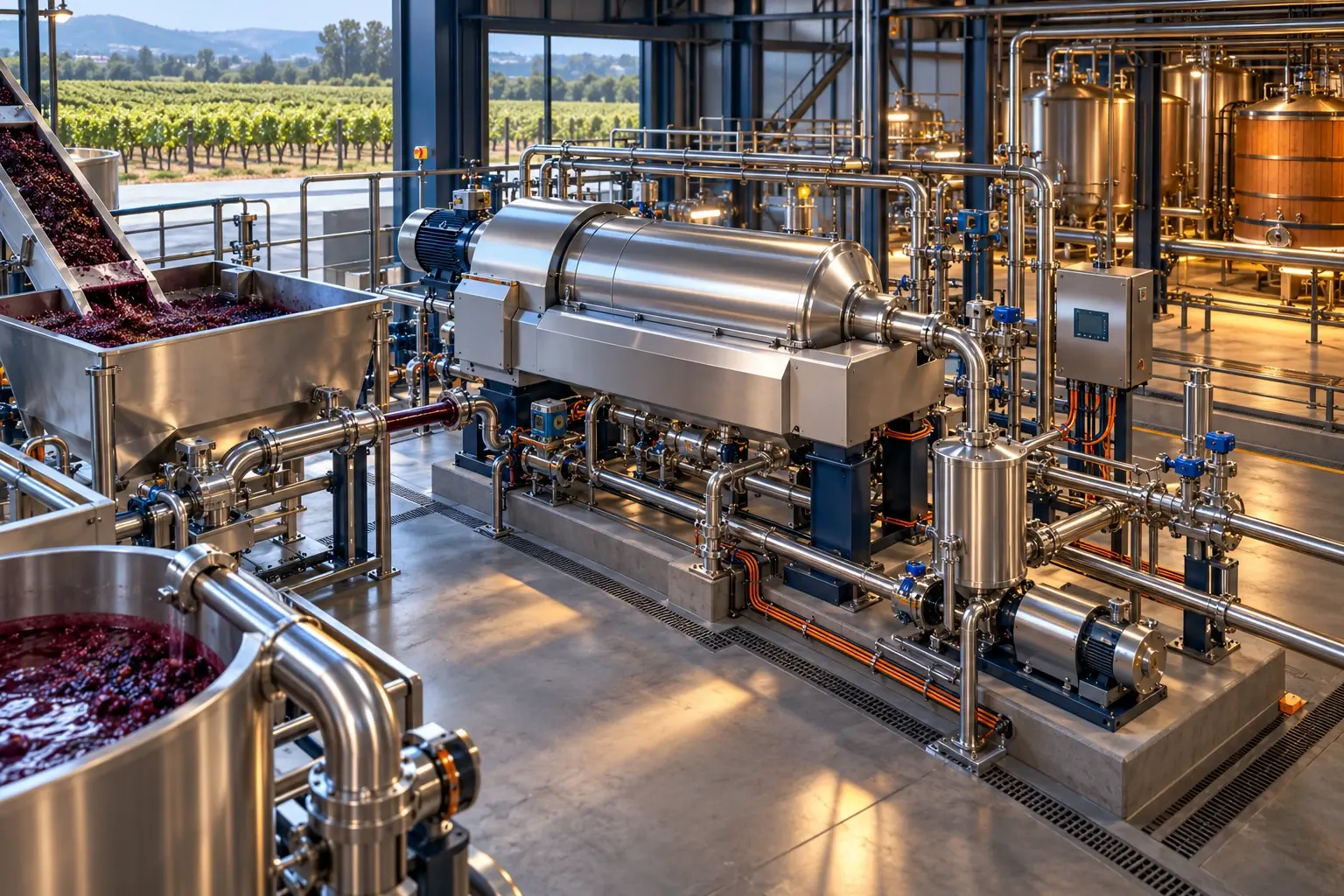
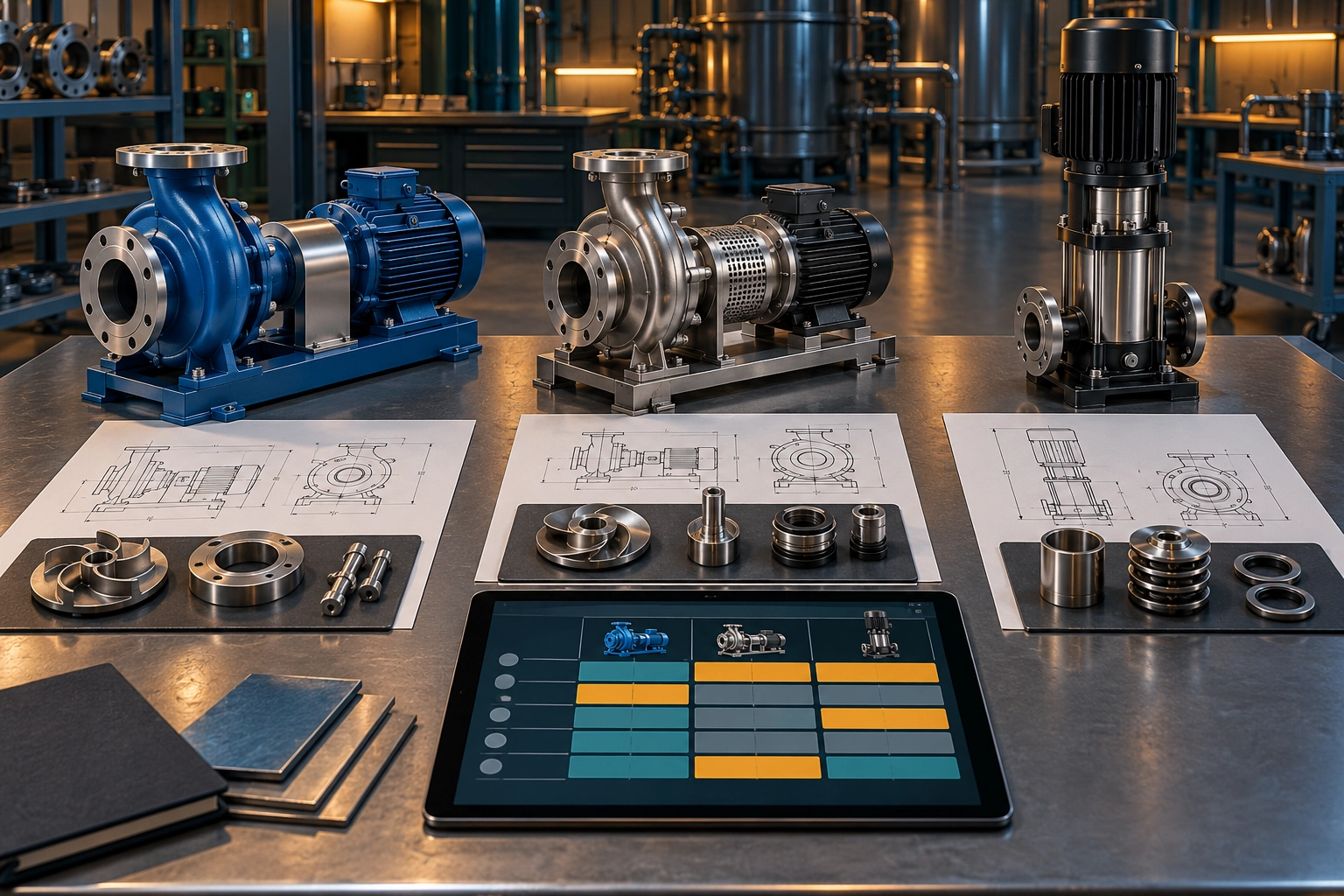
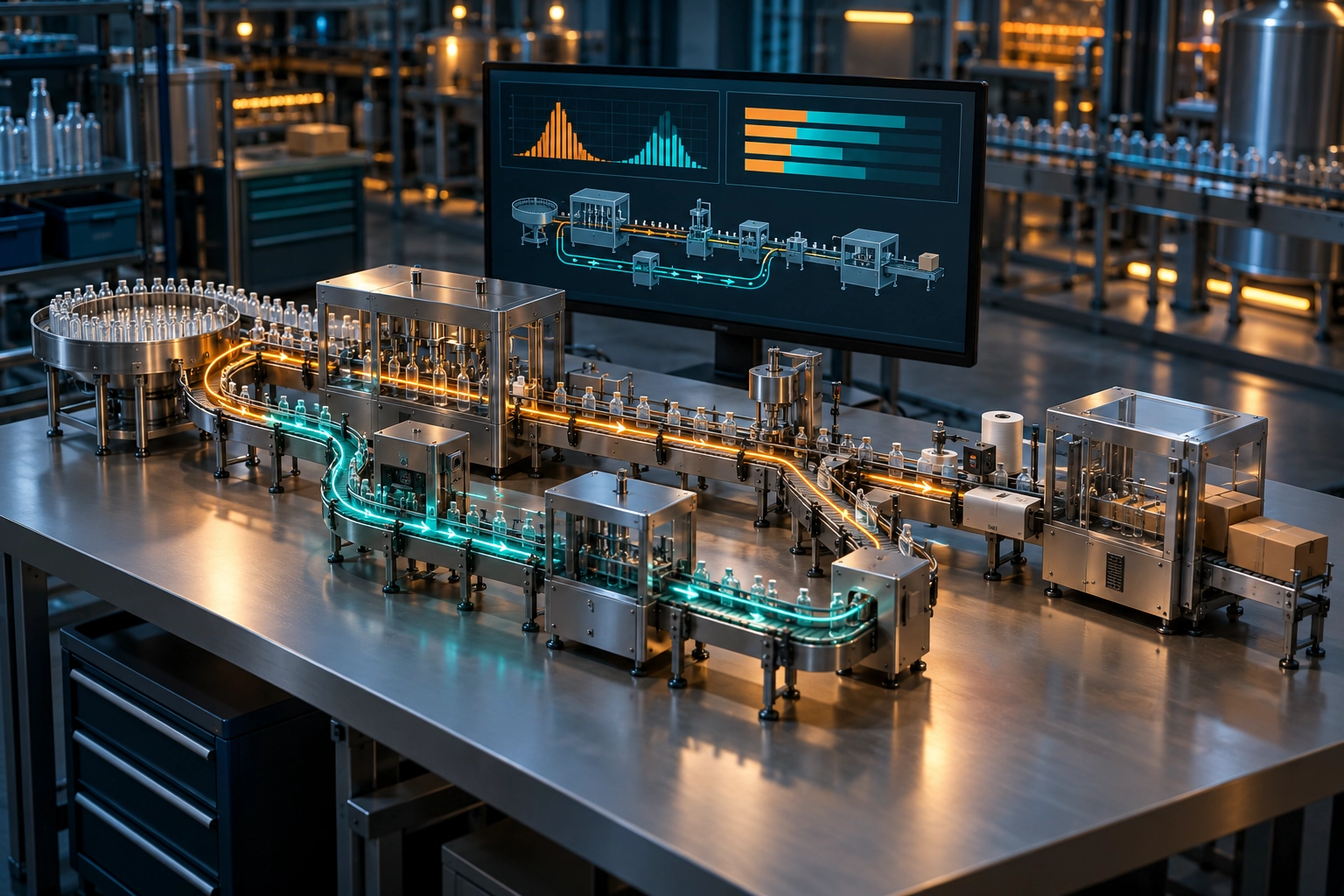
Led supplier evaluation and centrifuge-trial coordination against legacy centrifuge supplier performance, including two alternative centrifuge suppliers. Coordinated centrifuge, automated-CIP, utility and controls interfaces for upstream wine clarification and downstream vinegar operations. Investigated solids-pump failures and overnight-operation risk; developed pump, batch-controller, flow-measurement, air-purge and future transfer-loop requirements. Produced equipment specifications and engineering drawings and defined a phased VFD, tank-level and PLC/HMI integration roadmap.
The workstream includes site-specific filtration and centrifuge results, vendor laboratory and trial evidence, and planned system extensions. Measures remain attached to their individual projects and test settings.
Reduced operating expense by approximately $229,000 per year at the primary ceramic-crossflow implementation by eliminating consumables and extending CIP intervals. Eleven documented implementations carry a combined ceramic operating-expense benefit of $2,519,000 per year.
Reduced solid waste by an estimated 5,850 lb per year per ceramic implementation; the controlled multisite basis is 64,350 lb per year. Improved filtrate clarity and evaluated ion exchange for decolorization.
Reduced cleaning labor and DE or bentonite waste through automated CIP and hard-piped transfer loops. The related $65,286 annual labor reduction is presented separately and excluded from the combined total to avoid overlapping benefits.
Improved separation performance through centrifuge trials and process integration. The comparison documented about 50 percent higher efficiency and approximately $120,000 in one-time installation-cost reduction.
Recovered approximately 104,000 gallons per year of vinegar previously lost to wastewater, valued at $37,607 per year per documented contribution. The 12-site family basis is 1,248,000 gallons and $451,284 per year in gross recovered-product value.
Reduced pH-corrector use by approximately $54,000 per year and targeted $6,800 in avoided fines plus a $10,000 surcharge reduction, supporting the Michigan Manufacturing Facility total of $108,407 per year.
Estimated annual savings of $260,000 for the Missouri Manufacturing Facility centrifuging approach, with a downstream filtration target of 40 GPM.
The workstream annual benefit basis is $3,301,084. It counts the Michigan facility total once and includes $413,677 in incremental recovered-product value from the other eleven contributions; the gross family value is not added a second time.
Reduced solids-pump and overnight operating risks, addressed the 500 lb/day BOD constraint, and brought filtration duration toward four hours per day from approximately ten hours.
Demonstrated filtration of a day’s production in approximately seven hours through wine pre-filtration. Established filter-aid consumption targets, shutdown and inventory-coverage plans, and coordinated installation and commissioning requirements.
Eliminated acetation stalls and increased final filtration speeds by removing suspended solids before acetation. Reduced reliance on bentonite and DE filtration and targeted lower caustic and water use while retaining backup filtration capability.
Workstream covering wine clarification and vinegar polishing modernization across its named projects, with project-level engineering scope, capital values and operating context.
Reduced operating expense by approximately $229K per year by eliminating consumables and extending CIP intervals; Reduced solid waste by an estimated 5,850 lb per year and improved filtrate clarity consistency; Coordinated ion-exchange decolorization evaluation, including bench-method review and a proposed supplier pilot before any production decision; Evaluated centrifuge and CIP interfaces to reduce cleaning labor and DE/bentonite dependency; future hard-piped transfer loops remained integration scope; Improved clarity and yield by coordinating a centrifuge trial into existing process lines; Trials recorded about 50 percent higher separation efficiency and lower operational and installation cost compared with the legacy centrifuge supplier approach.
Coordinated ion-exchange decolorization evaluation within the vinegar-polishing workstream, including bench-method review and a proposed supplier pilot before any production decision.
Workstream Cost: 18317 K.
Centrifuge filtration for wine and cider vinegar, DE and fiber filter aid cost control, production scheduling for equipment relocation; CIP Automation, Centrifuge Systems; CIP Automation, Process Filtration & Clarification; centrifuge filtration, filtration-system throughput improvement, bentonite treatment impacts, inter-plant byproduct handling, throughput target of 40 gpm; centrifuge skid coordination, membrane protection, wastewater compliance drivers (BOD and total waste), vendor startup and operator training; centrifuge filtration, upstream solids removal for acetation stability, backup DE and bentonite filtration, cleaning and consumables risk management.
Capital Project Lifecycle Management; Capital Project Lifecycle Management, Multidisciplinary Coordination, QA/QC system implementation; Process bottleneck resolution, production continuity planning, filtration standardization, risk-based performance management and operational readiness; Process improvement under formulation change and production-risk mitigation; Process optimization and recovery, wastewater compliance alignment, multidisciplinary installation coordination (mechanical, piping, electrical), startup and training management; Process trials to production standardization, cost impact analysis and savings quantification, throughput restoration strategy, and operations coordination across multiple sites.
ACTIVITIES IN CONTEXT
TSK-000022 · Action
Wine Clarification and Vinegar Polishing Modernization
TSK-000023 · Action
Wine Clarification and Vinegar Polishing Modernization
TSK-000024 · Action
Wine Clarification and Vinegar Polishing Modernization
TSK-000025 · Action
Wine Clarification and Vinegar Polishing Modernization
TSK-000026 · Capability scope
Wine Clarification and Vinegar Polishing Modernization
TSK-000027 · Capability scope
Wine Clarification and Vinegar Polishing Modernization
TSK-000028 · Capability scope
Wine Clarification and Vinegar Polishing Modernization
TSK-000029 · Capability scope
Wine Clarification and Vinegar Polishing Modernization
TSK-000030 · Technical context
Wine Clarification and Vinegar Polishing Modernization
TSK-000031 · Technical context
Wine Clarification and Vinegar Polishing Modernization
TSK-000032 · Technical context
Wine Clarification and Vinegar Polishing Modernization
TSK-000033 · Technical context
Wine Clarification and Vinegar Polishing Modernization
TSK-000034 · Technical context
Wine Clarification and Vinegar Polishing Modernization
Full lifecycle project ownership
Project Leadership
Led supplier evaluation and centrifuge-trial coordination, investigated centrifuge supplier operating issues, and developed filtration, CIP, transfer, instrumentation and staged automation requirements.
Owned the full project lifecycle: capital planning and prioritization, need definition, feasibility and scope development, engineering and AFE justification, procurement and vendor coordination, construction sequencing and field oversight, commissioning, turnover, and post-startup support. Connected operating requirements with technical scope, funding decisions, execution readiness, and the needs of operations and maintenance.
Ceramic filtration combines consumables and CIP improvements with product recovery and an estimated reduction in disposable-media waste. Separate winery-centrifuge pilots evaluate clarity, throughput, CIP interfaces, supplier reliability and lifecycle cost. Ion-exchange decolorization remains an evaluation path. Each site retains its own observed trial data, operating results and financial assumptions.
Investigated whether fouled high/low probes in the centrifuge supplier waste housing could create a false full signal and continuous macerator operation; proposed cleaning the probes and checking HMI spray frequency/timers. The suggested 30-second motor limit remained a question. Recommended reducing sharp outlet-fitting and hose bends to limit waste-discharge pressure loss.