
Investment Economics and Lifecycle Analysis
Evaluate ROI, NPV, IRR, Payback, Breakeven, Cost per Gallon, and Lifecycle/TCO Alternatives
Engineering practice and documented application
 APOLLO AUTOMATIONJAMES WARREN · ENGINEERING & PROJECT LEADERSHIP
JAMES WARREN · APOLLO AUTOMATION
Engineering judgment, capital project ownership and practical operating context.
Time-value-of-money analysis, present value, annuities, discounted cash flow, NPV and IRR provide ways to compare capital alternatives on a consistent basis. Lease-versus-buy analysis, risk-adjusted discount rates, scenarios and sensitivity testing show which assumptions drive a decision. These methods connect equipment and operating requirements with capital justification without treating an estimate as a realized result.
Explore the specific capabilities and their connected activities.
Investment Economics and Lifecycle Analysis
Engineering practice and documented application
Investment Economics and Lifecycle Analysis
Engineering practice and documented application
Investment Economics and Lifecycle Analysis
Engineering practice and documented application
Investment Economics and Lifecycle Analysis
Engineering practice and documented application
Investment Economics and Lifecycle Analysis
Engineering practice and documented application
Investment Economics and Lifecycle Analysis
Academic preparation and analytical method
Explore the specific capabilities and their connected activities.

Risk, Uncertainty, and Decision Support
Engineering practice and documented application
Risk, Uncertainty, and Decision Support
Engineering practice and documented application
Risk, Uncertainty, and Decision Support
Engineering practice and documented application
Risk, Uncertainty, and Decision Support
Engineering practice and documented application
Risk, Uncertainty, and Decision Support
Engineering practice and documented application
Risk, Uncertainty, and Decision Support
Engineering practice and documented application
Statistical process control, capability indices, measurement-system analysis, hypothesis testing and acceptance sampling help distinguish normal variation from a meaningful change. Pareto and cause-and-effect analysis focus investigation, while calibration and gage repeatability and reproducibility establish whether the measurements are suitable for the decision.
Explore the specific capabilities and their connected activities.

Statistical Quality, Measurement Systems, and Sampling
Academic preparation and analytical method
Statistical Quality, Measurement Systems, and Sampling
Academic preparation and analytical method
Statistical Quality, Measurement Systems, and Sampling
Academic preparation and analytical method
Statistical Quality, Measurement Systems, and Sampling
Academic preparation and analytical method
Statistical Quality, Measurement Systems, and Sampling
Academic preparation and analytical method
Linear and integer programming express decisions as variables, objectives and constraints. Resource allocation, production scheduling, network flow and assignment models make tradeoffs between capacity, labor, cleaning windows and utility availability explicit. Sensitivity analysis helps explain the value of relieving a constraint.
Explore the specific capabilities and their connected activities.

Optimization and Operations Research
Academic preparation and analytical method
Optimization and Operations Research
Academic preparation and analytical method
Optimization and Operations Research
Academic preparation and analytical method
Optimization and Operations Research
Engineering practice and documented application
Optimization and Operations Research
Academic preparation and analytical method
Optimization and Operations Research
Academic preparation and analytical method
Forecasting, regression, seasonality and error measures support demand planning. Reorder points, safety stock, economic order quantities and service-level analysis connect inventory policy with lead-time variability and shortage exposure. Transportation and distribution models compare routing, capacity and service requirements on a consistent basis.
Explore the specific capabilities and their connected activities.

Forecasting, Inventory, Supply Chain, and Logistics
Academic preparation and analytical method
Forecasting, Inventory, Supply Chain, and Logistics
Academic preparation and analytical method
Forecasting, Inventory, Supply Chain, and Logistics
Academic preparation and analytical method
Forecasting, Inventory, Supply Chain, and Logistics
Academic preparation and analytical method
Forecasting, Inventory, Supply Chain, and Logistics
Academic preparation and analytical method
Forecasting, Inventory, Supply Chain, and Logistics
Academic preparation and analytical method
Forecasting, Inventory, Supply Chain, and Logistics
Engineering practice and documented application
Probability, expected value, variance and covariance help describe uncertain demand, failures and schedule exposure. Event-arrival models, state-transition models and queueing relationships connect operating variability with staffing, availability, cycle time and work in process. Scenario analysis makes the consequences of assumptions visible before a commitment is made.
Explore the specific capabilities and their connected activities.
Stochastic Models and Uncertainty Analytics
Academic preparation and analytical method
Stochastic Models and Uncertainty Analytics
Academic preparation and analytical method
Stochastic Models and Uncertainty Analytics
Academic preparation and analytical method
Stochastic Models and Uncertainty Analytics
Academic preparation and analytical method
Stochastic Models and Uncertainty Analytics
Academic preparation and analytical method
One-way and two-way ANOVA, factorial designs, blocking and fractional-factorial screening help separate factors and interactions. Regression and correlation quantify relationships, while residual diagnostics, variance checks, autocorrelation review and confirmation runs test whether an inference is dependable. The statistical work connects a model's conclusions with the quality and limits of its inputs.
Explore the specific capabilities and their connected activities.

DOE, Regression, and Empirical Statistical Modeling
Academic preparation and analytical method
DOE, Regression, and Empirical Statistical Modeling
Academic preparation and analytical method
DOE, Regression, and Empirical Statistical Modeling
Academic preparation and analytical method
DOE, Regression, and Empirical Statistical Modeling
Academic preparation and analytical method
DOE, Regression, and Empirical Statistical Modeling
Academic preparation and analytical method
DOE, Regression, and Empirical Statistical Modeling
Academic preparation and analytical method
DOE, Regression, and Empirical Statistical Modeling
Academic preparation and analytical method
DOE, Regression, and Empirical Statistical Modeling
Academic preparation and analytical method
DOE, Regression, and Empirical Statistical Modeling
Engineering practice and documented application
The analytical work includes data preparation, exploration, transformation and baseline analysis for production-rate studies. ANOVA, regression and diagnostic checks connect candidate drivers with measured performance. The purpose is to identify useful operating decisions from the evidence and explain the assumptions behind them.
Explore DOE, regression, and empirical statistical modeling capabilities ↑
Explore the specific capabilities and their connected activities.

Data Analytics, BI, and Operational Reporting
Engineering practice and documented application
Data Analytics, BI, and Operational Reporting
Engineering practice and documented application
Data Analytics, BI, and Operational Reporting
Engineering practice and documented application
Data Analytics, BI, and Operational Reporting
Engineering practice and documented application
Data Analytics, BI, and Operational Reporting
Engineering practice and documented application
Data Analytics, BI, and Operational Reporting
Engineering practice and documented application
Work sampling, observation planning, sample-size calculations and confidence intervals provide a basis for labor standards and staffing models. Clear activity definitions make comparisons repeatable across shifts and facilities. Worker-machine analysis, line balancing, standard work and automation alternatives connect measured work content with an improved operating method.
Explore the specific capabilities and their connected activities.
Industrial Engineering, Methods, and Work Measurement
Engineering practice and documented application
Industrial Engineering, Methods, and Work Measurement
Engineering practice and documented application
Industrial Engineering, Methods, and Work Measurement
Engineering practice and documented application
Industrial Engineering, Methods, and Work Measurement
Engineering practice and documented application
Industrial Engineering, Methods, and Work Measurement
Engineering practice and documented application
SIPOC and process maps establish boundaries and handoffs. FMEA prioritizes failure modes, while control plans translate requirements into monitoring, triggers and corrective action. DMAIC, structured problem solving, error-proofing and verification support improvements that can be sustained in day-to-day operation.
Explore the specific capabilities and their connected activities.
Lean Six Sigma, Quality Systems, and Governance Maturity
Engineering practice and documented application
Lean Six Sigma, Quality Systems, and Governance Maturity
Engineering practice and documented application
Lean Six Sigma, Quality Systems, and Governance Maturity
Engineering practice and documented application
Lean Six Sigma, Quality Systems, and Governance Maturity
Engineering practice and documented application
Lean Six Sigma, Quality Systems, and Governance Maturity
Engineering practice and documented application
Lean Six Sigma, Quality Systems, and Governance Maturity
Engineering practice and documented application
Lean Six Sigma, Quality Systems, and Governance Maturity
Engineering practice and documented application
Cooling-load and pump calculations, steam and pressure analysis, filtration-capacity comparisons, electrical load planning and packaging-flow studies connect quantitative analysis with capital decisions. The project pages show how these methods support equipment selection, interface definition and practical execution.
Explore Investment economics and lifecycle analysis capabilities ↑
Explore the specific capabilities and their connected activities.
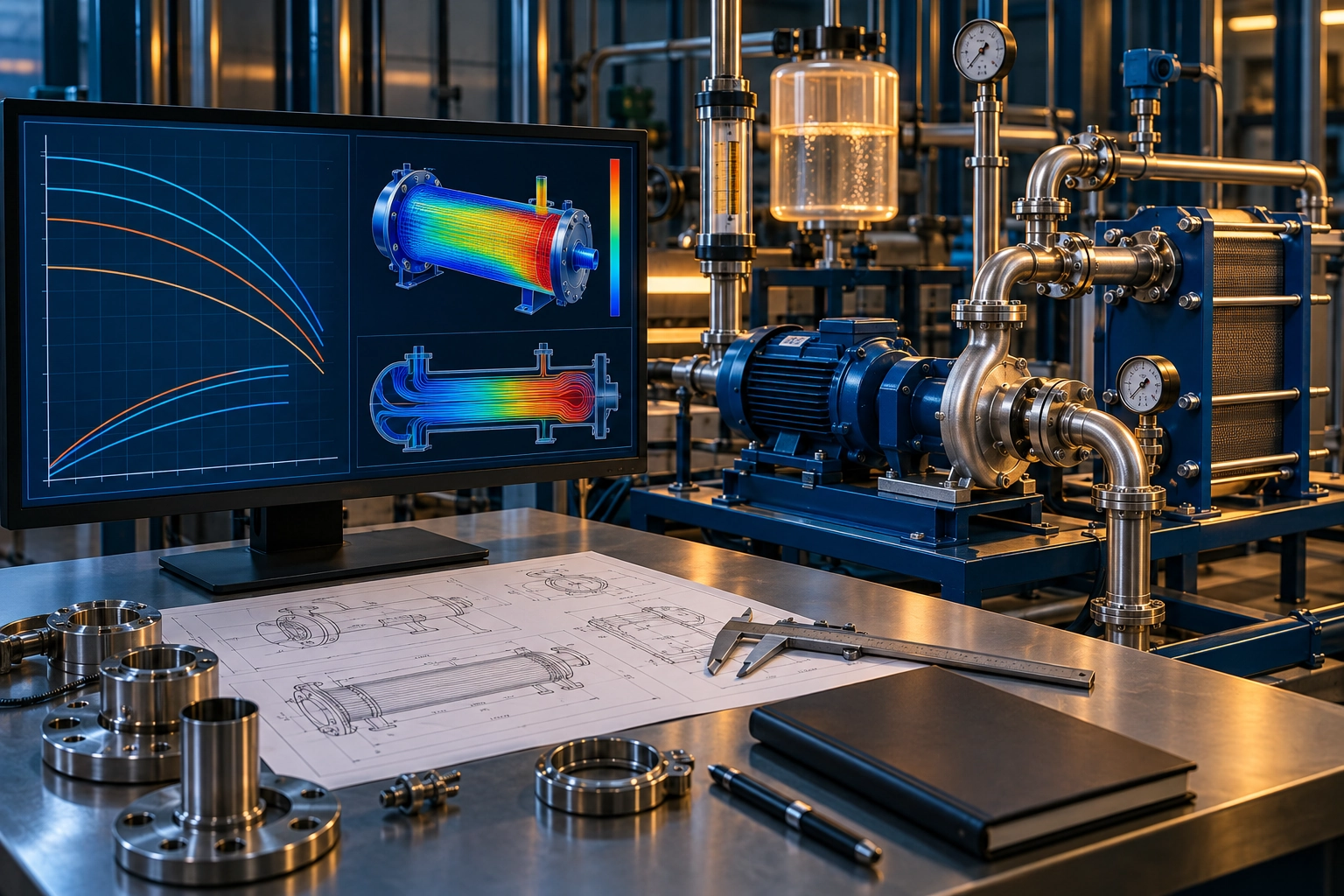
Thermal/Hydraulic Analysis and Engineering-Calculation Review
Engineering practice and documented application
Thermal/Hydraulic Analysis and Engineering-Calculation Review
Engineering practice and documented application
Thermal/Hydraulic Analysis and Engineering-Calculation Review
Engineering practice and documented application
Thermal/Hydraulic Analysis and Engineering-Calculation Review
Engineering practice and documented application
Thermal/Hydraulic Analysis and Engineering-Calculation Review
Engineering practice and documented application
A useful measure has an owner, a defined unit, a reporting period and a clear operating scope. Rates, equipment ratings, project results and cross-facility totals answer different questions. Consistent definitions, data checks and action thresholds make dashboards useful for decisions about reliability, capacity, schedule and benefits.
Explore Data analytics, BI, and operational reporting capabilities ↑
The portfolio brings together industrial-engineering study, applied analytical work and plant project experience. Method descriptions explain the analytical toolkit; linked projects show specific engineering applications. This connects rigorous analysis with decisions about production, utilities, maintenance, construction and operating readiness.
Explore Industrial engineering, methods, and work measurement capabilities ↑
Explore Optimization and operations research capabilities ↑
Explore Data analytics, BI, and operational reporting capabilities ↑
Explore the completed decision briefs and capability application reviews →