TSK-000050 · Action
Separation-Equipment and Supplier Evaluation Criteria
Centrifuge Supplier Evaluation and Manufacturing Maturity Scorecard
 APOLLO AUTOMATIONJAMES WARREN · ENGINEERING & PROJECT LEADERSHIP
CASE-030 · Engineering case
Developed a structured supplier-evaluation model for centrifuge selection using performance, documentation, serviceability, compliance, process maturity, and total-cost criteria.

Centrifuge selection had operational, quality, sustainability, service, and lifecycle-cost consequences, so vendor comparison needed to include more than purchase price.
Separation-Equipment and Supplier Evaluation Criteria
Improved supplier-evaluation rigor and capital decision defensibility.
Workstream Portfolio Rollup
18,317,000 USD
Wine Clarification and Vinegar Polishing Modernization
Recorded workstream portfolio reference. This is the workstream-level value and is not a project expenditure or a new total of reassigned projects.
| Measure | Value | Type & meaning | Attribution & operating context |
|---|---|---|---|
| Supplier Service Proposal A: Intermediate-Service Interval | 2,000 h | Operating Control Supplier service estimate | Applies to: Centrifuge Supplier Evaluation and Manufacturing Maturity Scorecard Vendor service proposal; intervals and travel-dependent costs are distinct from completed maintenance. |
| Supplier Service Proposal A: Intermediate-Service Calendar Interval | 3 month | Operating Control Supplier service estimate | Applies to: Centrifuge Supplier Evaluation and Manufacturing Maturity Scorecard Vendor service proposal; intervals and travel-dependent costs are distinct from completed maintenance. |
| Supplier Service Proposal A: Major-Service Interval | 8,000 h | Operating Control Supplier service estimate | Applies to: Centrifuge Supplier Evaluation and Manufacturing Maturity Scorecard Vendor service proposal; intervals and travel-dependent costs are distinct from completed maintenance. |
| Supplier Service Proposal A: Major-Service Calendar Interval | 1 year | Operating Control Supplier service estimate | Applies to: Centrifuge Supplier Evaluation and Manufacturing Maturity Scorecard Vendor service proposal; intervals and travel-dependent costs are distinct from completed maintenance. |
| Supplier Service Proposal B: Minor-Service Interval | 1,500 h | Operating Control Supplier service estimate | Applies to: Centrifuge Supplier Evaluation and Manufacturing Maturity Scorecard Meeting/quote service estimate; silicon-carbide seal cost and frequency were unresolved. |
| Supplier Service Proposal B: Major-Service Interval | 8,000 h | Operating Control Supplier service estimate | Applies to: Centrifuge Supplier Evaluation and Manufacturing Maturity Scorecard Meeting/quote service estimate; silicon-carbide seal cost and frequency were unresolved. |
| Supplier Service Proposal B: Oil-Change Interval | 750 h | Operating Control Supplier service estimate | Applies to: Centrifuge Supplier Evaluation and Manufacturing Maturity Scorecard Meeting/quote service estimate; silicon-carbide seal cost and frequency were unresolved. |
| Dynamic Turbidity-Control Lead-Time Increment | 6 to 8 weeks | Estimate Supplier lead-time estimate | Applies to: Centrifuge Supplier Evaluation and Manufacturing Maturity Scorecard Centrifuge supplier option comparison — Additional build time for the dynamic flow-control option. |
| DB-2012 Quoted Flow Range | 40 to 50 GPM | Equipment Rating Supplier sizing reference | Applies to: Centrifuge Supplier Evaluation and Manufacturing Maturity Scorecard Centrifuge supplier option comparison — DB-2012 vendor flow range for equipment comparison. |
| DB-4525 Quoted Flow Range | 80 to 100 GPM | Equipment Rating Supplier sizing reference | Applies to: Centrifuge Supplier Evaluation and Manufacturing Maturity Scorecard Centrifuge supplier option comparison — DB-4525 vendor flow range for equipment comparison. |
| DB-6052 Quoted Flow Range | 160 to 200 GPM | Equipment Rating Supplier sizing reference | Applies to: Centrifuge Supplier Evaluation and Manufacturing Maturity Scorecard Centrifuge supplier option comparison — DB-6052 vendor flow range for equipment comparison. |
| Vendor Sizing Example Flow | 30 GPM | Design Parameter Supplier sizing reference | Applies to: Centrifuge Supplier Evaluation and Manufacturing Maturity Scorecard Centrifuge supplier application discussion — Flow used in the supplier solids-discharge sizing example. |
| Vendor Sizing Example Equivalent Flow | 114 L/min | Design Parameter Supplier sizing reference | Applies to: Centrifuge Supplier Evaluation and Manufacturing Maturity Scorecard Centrifuge supplier application discussion — Supplier-stated equivalent flow, retained without replacing it with a newly rounded conversion. |
| Vendor Sizing Example Feed Solids | 0.5 % | Design Parameter Supplier sizing reference | Applies to: Centrifuge Supplier Evaluation and Manufacturing Maturity Scorecard Centrifuge supplier application discussion — Solids basis used in the supplier sizing example. |
| Vendor Sizing Example Discharge Interval | 7.9 min | Scenario or Model Result Supplier sizing reference | Applies to: Centrifuge Supplier Evaluation and Manufacturing Maturity Scorecard Centrifuge supplier application discussion — Calculated discharge interval stated by the supplier at the example feed. |
| Vendor Solids-Hold Concern | 20 min | Design Parameter Supplier sizing reference | Applies to: Centrifuge Supplier Evaluation and Manufacturing Maturity Scorecard Centrifuge supplier application discussion — Hold duration discussed as a solids-packing concern, not an approved timer setting. |
| Vendor Comparison Backpressure Range | 5 to 6 bar | Historical/Reference Value Supplier comparison reference | Applies to: Centrifuge Supplier Evaluation and Manufacturing Maturity Scorecard Open-bowl design discussion — Backpressure range discussed in the supplier design comparison. |
| Initial Oil-Change Interval | 300 h | Operating Control Supplier maintenance guidance | Applies to: Centrifuge Supplier Evaluation and Manufacturing Maturity Scorecard Centrifuge supplier first service — Initial oil-change interval preceding the recurring 750-hour interval. |
| Separator Load Reference | 22 kW | Equipment Rating Equipment design reference | Applies to: Centrifuge Supplier Evaluation and Manufacturing Maturity Scorecard Supplier electrical comparison — Separator component load in the centrifuge supplier comparison. |
| Centrifuge Supplier Solids-Pump Load Reference | 1.5 kW | Equipment Rating Equipment design reference | Applies to: Centrifuge Supplier Evaluation and Manufacturing Maturity Scorecard Supplier electrical comparison — Solids-pump component load in the centrifuge supplier comparison. |
| Centrifuge Supplier Service Load Reference | 25 kW | Design Parameter Equipment design reference | Applies to: Centrifuge Supplier Evaluation and Manufacturing Maturity Scorecard Supplier electrical comparison — Service-load reference used in vendor energy questions. |
| Brew 250 Separator Load Reference | 18.5 kW | Equipment Rating Equipment design reference | Applies to: Centrifuge Supplier Evaluation and Manufacturing Maturity Scorecard Supplier electrical comparison — Separator component in the Brew 250 one-line. |
| Brew 250 Solids-Pump Load Reference | 3 kW | Equipment Rating Equipment design reference | Applies to: Centrifuge Supplier Evaluation and Manufacturing Maturity Scorecard Supplier electrical comparison — Solids-pump component in the Brew 250 one-line. |
| Brew 250 Feed-Pump Load Reference | 4.8 kW | Equipment Rating Equipment design reference | Applies to: Centrifuge Supplier Evaluation and Manufacturing Maturity Scorecard Supplier electrical comparison — Feed-pump component in the Brew 250 one-line. |
| Brew 250 Listed Component Total | 26.3 kW | Design Parameter Equipment design reference | Applies to: Centrifuge Supplier Evaluation and Manufacturing Maturity Scorecard Supplier electrical comparison — Sum of the three listed Brew 250 component loads. |
| Clara 250 Service Load Reference | approximately 40 kW | Design Parameter Equipment design reference | Applies to: Centrifuge Supplier Evaluation and Manufacturing Maturity Scorecard Supplier electrical comparison — Approximate service requirement raised in the comparison question. |
| Brew 250 Recommended Supply Current | 80 A | Equipment Rating Supplier supply requirement | Applies to: Centrifuge Supplier Evaluation and Manufacturing Maturity Scorecard Brew 250 three-phase service — Supplier-recommended supply capacity, distinct from operating demand. |
| Brew 250 Supply Voltage | 460 V | Equipment Rating Supplier supply requirement | Applies to: Centrifuge Supplier Evaluation and Manufacturing Maturity Scorecard Brew 250 three-phase service — Three-phase supply voltage in the feed-pump/main-panel discussion. |
Improved capital decision quality by turning subjective vendor preferences into weighted, auditable selection criteria.
Improved supplier-selection discipline, measured by a weighted centrifuge scorecard covering performance, cost, serviceability, documentation, compliance, maturity, and support, by converting vendor comparison into a transparent decision model.
23-system comparison framework; criteria across documentation, performance, serviceability, cost, usability, compliance, patents, citation quality, supply chain, process efficiency, and CMM maturity.
ACTIVITIES IN CONTEXT
TSK-000050 · Action
Centrifuge Supplier Evaluation and Manufacturing Maturity Scorecard
TSK-000051 · Method
Centrifuge Supplier Evaluation and Manufacturing Maturity Scorecard
Full lifecycle project ownership
Direct Work
Built weighted centrifuge supplier comparisons, challenged equipment/energy and service claims, and reviewed documentation, lifecycle cost, technical design and commercial alternatives.
Owned the full project lifecycle: capital planning and prioritization, need definition, feasibility and scope development, engineering and AFE justification, procurement and vendor coordination, construction sequencing and field oversight, commissioning, turnover, and post-startup support. Connected operating requirements with technical scope, funding decisions, execution readiness, and the needs of operations and maintenance.
Supplier Evidence and Technical Reference
Supplier Reference
Centrifuge supplier, centrifuge supplier and other suppliers provided quotations, service terms, equipment documentation and technical responses for The comparison.
Compared a centrifuge supplier offer including delivery and commissioning, with rental payments credited toward purchase if retained and rental cost payable if returned. A centrifuge supplier equipment quotation challenged that installed budget after delivery, tax and startup. A Clara 450 budgetary option excluded delivery and commissioning; a Clara 250 trial was proposed to verify 30–50 GPM service before scale-up. These are distinct commercial options, not actual expenditures.
Centrifuge supplier described intermediate service at 2,000 operating hours or three months and major service at 8,000 hours or one year. Service estimates depended on machine size and travel; major service included the intermediate work. Service-contract discounts, preferential scheduling and extended warranty remained subjects for further agreement. The questionnaire examples were not supplier quotations.
Centrifuge supplier meeting notes recorded a 1,500-hour minor-service interval with parts provisions, 8,000-hour major service and a 750-hour oil-change interval. Separate estimates covered oil-change visits, minor service and major service, including travel and technician requirements. Silicon-carbide seal replacement cost and frequency remained unresolved. The supplier proposed reviewing intervals after minor-service inspections; annual carbon-seal replacement was a separate application-based expectation.
Built weighted supplier assessments for quality/reliability, product range, customization, operating cost, sustainability, service, warranty, financial health, market presence, adaptability, compliance, certification and maturity. Individual scores and rationales are evaluation artifacts. Certification and financial/market assertions require direct supporting documents; some supplied weighted products/totals are inconsistent and are not validated rankings.
The centrifuge supplier comparison listed DB-2012 at 40–50 GPM with 175000 USD base cost and 59000 USD extras; DB-4525 at 80–100 GPM with 275000 USD base cost and 70000 USD extras; and DB-6052 at 160–200 GPM with prices still to be obtained. Dynamic flow control using inlet/outlet turbidity added 50000 USD and 6–8 weeks to the build. A larger system was presented as a 100000 USD alternative for roughly twice the throughput.
Reviewed the separator manufacturer, manual currency and equipment BOM against actual component suppliers. The comparison identified separation-equipment supplier separation equipment, sanitary-pump supplier FLOW valves/pumps, and instrumentation supplier, instrumentation supplier or instrumentation supplier sensing, and evaluated the benefit of components already common across sites. Vendor responses about newer NTU meters and water/air tubing were included in the hardware review.
Requested complete installation manuals, equipment BOMs and electrical drawings, and compared Clara 250/Brew 250 offers against an equivalent scope including feed pump, inlet/outlet turbidity, recipe control, capacity control, recirculation and an automatic flow-control valve. The request sought installation documentation rather than workstream source code.
Compared equipment loads and supply requirements before accepting vendor energy-saving claims. Centrifuge supplier reference components were 22 kW separation and 1.5 kW solids pumping; the Brew 250 one-line listed 18.5 kW separation,3 kW solids pumping and 4.8 kW feed pumping, totaling 26.3 kW, with an 80 A 460 V three-phase supply recommendation. A Clara 250 request cited nearly 40 kW service against a 25 kW centrifuge supplier reference. Nameplate/service capacity and vendor energy claims were evaluated separately from measured energy consumption. Vendor claims ranging from 30% to 70% energy savings, including an up-to 60% statement, were challenged against the equipment and service requirements; no measured energy-saving outcome was established by those claims.
Built a weighted supplier comparison spanning quality/consistency, process efficiency, innovation/adaptability, supply-chain logistics, compliance/certification maturity, future readiness, customer satisfaction, operational reliability, financial stability and capability maturity. Supporting criteria included delivery, service network, documentation, patents, market/application history, sustainability, responsiveness and digital support. The comparison method supported technical and commercial questioning rather than an independently validated supplier ranking.
Compared bowl diameter, disc geometry, rotational speed, centrifugal force, dwell time, feed location, pressure differential and seal design across vendor proposals. Reviewed axial-hermetic, hydro-hermetic and fully hermetic approaches and the associated gas/oxygen questions. A supplier clarification described CO2 use during discharge to keep inlet pressure positive, rather than a continuous separation aid; the proposed benefit required testing.
Requested annual service coverage, extended warranty options, local spares, repair history, technician availability and remote support. Centrifuge supplier guidance added a first oil change at 300 hours before the recurring 750-hour interval. The review sought oil/additive quantities and prices for water filters, sludge probes, stators, impeller seals and bowl-flush valve rebuild kits, and considered plant-performed oil changes. Supplier parts-network and technician-experience statements were inputs to due diligence.
Reviewed a vendor sizing example of 30 GPM, approximately 114 LPM, at 0.5% solids with a 7.9-minute discharge interval and a possible packing problem if solids remained 20 minutes. Other comparison arguments used bowl size, a 62 GPM nominal rating,5–6 bar limits and inlet/outlet differential pressure. Vendor claims of proportional throughput and comparative superiority were treated as questions for application testing, not a universal sizing rule.
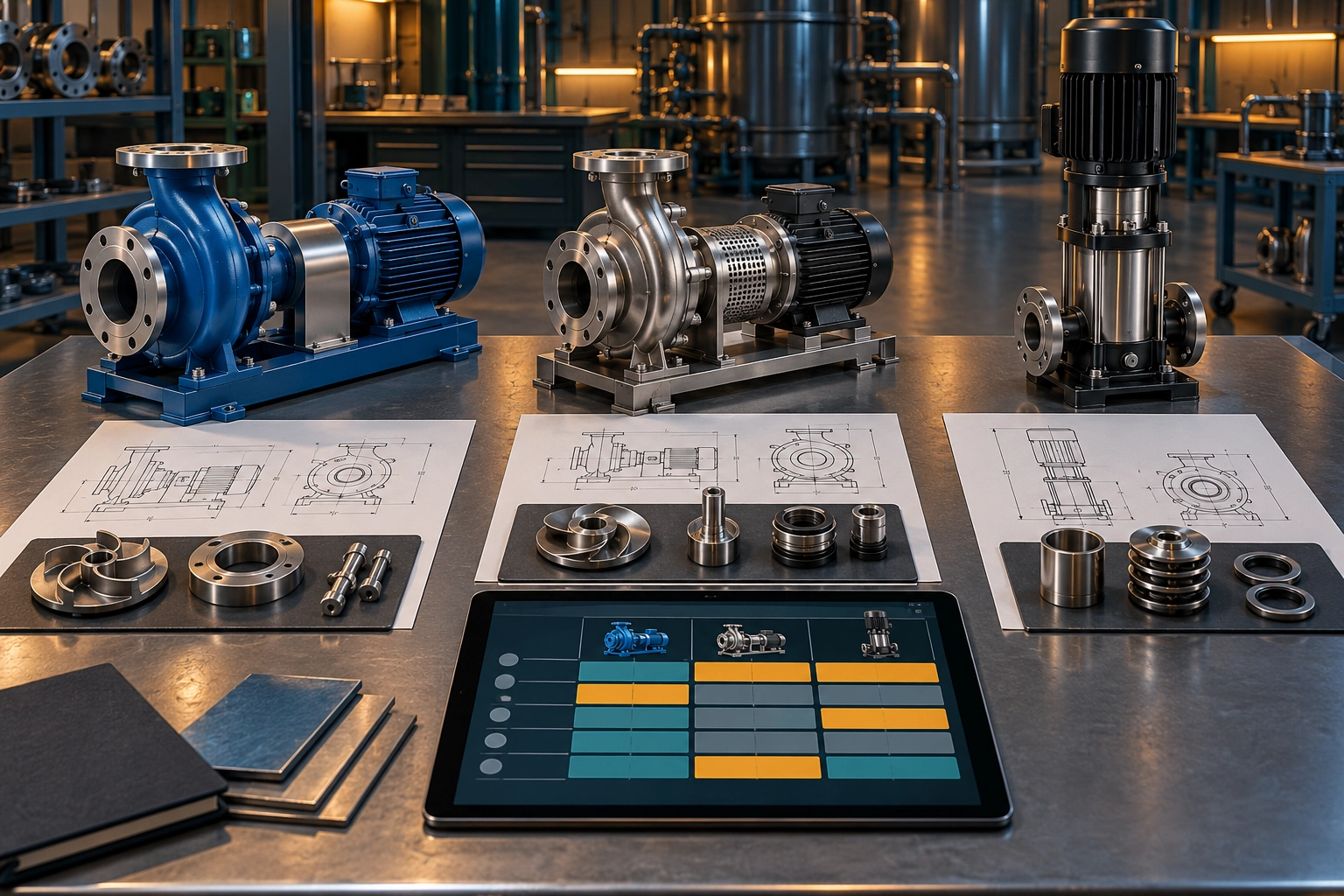
Prepared a comparison matrix that extended initial price and separation performance to documentation, manufacturing maturity, maintenance burden, service evidence and long-term support. Coordinated parallel trials at separate facilities and sought plant ownership between engineering visits. Challenged unsupported supplier-service assertions and requested comparable quotations and sector references before a final capital decision.