TSK-000222 · Method
Built BTU/Hr and GPM / Delta T Models, Evaluated Chiller Energy Performance, and Compared Do-Nothing, Repair, and Replacement Options
Cooling Load Modeling and Thermal Deficit Analysis
 APOLLO AUTOMATIONJAMES WARREN · ENGINEERING & PROJECT LEADERSHIP
CASE-082 · Engineering case
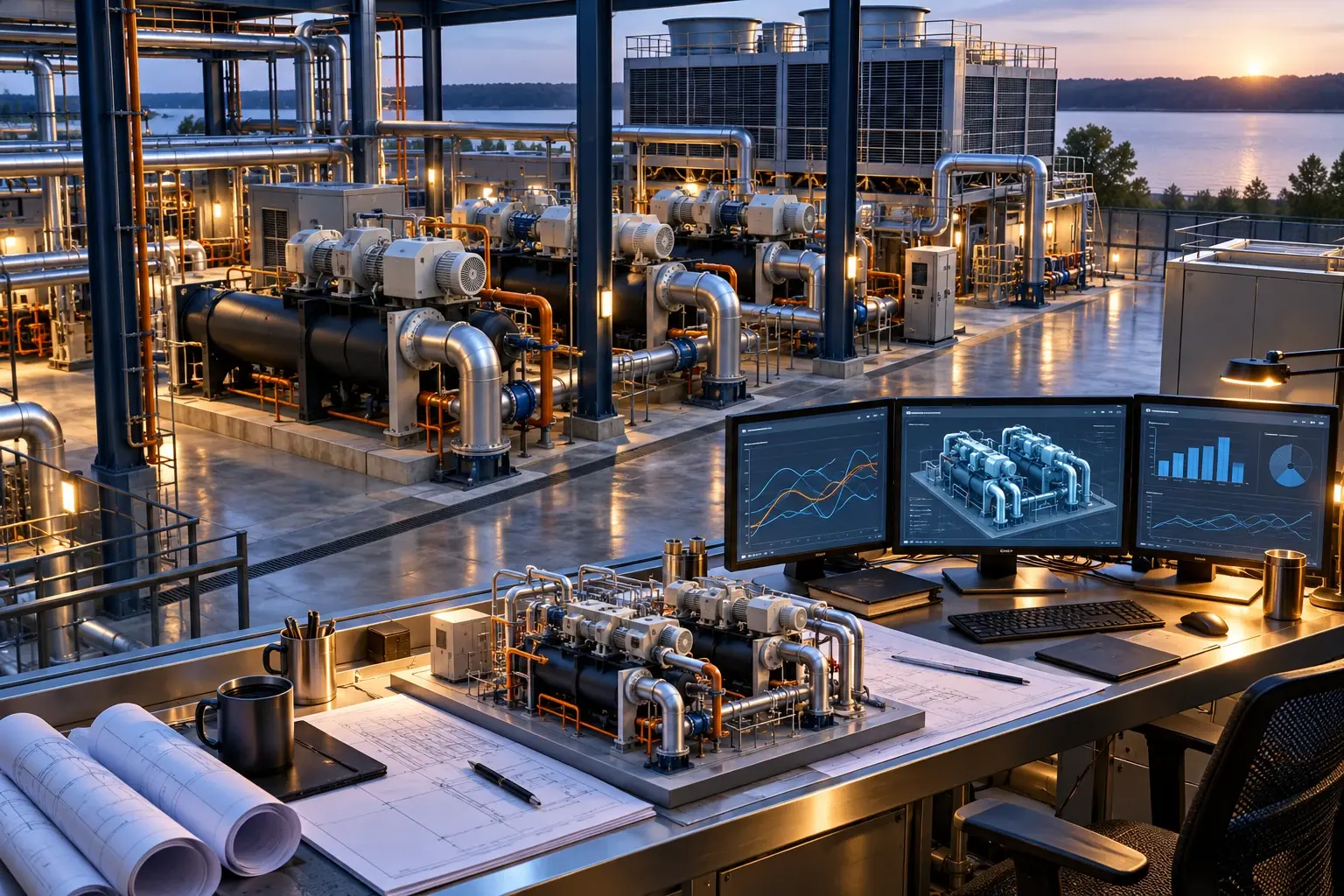
Modernized production cooling with three 160-ton chillers and coordinated piping, controls, electrical and BAS interfaces.
Reduced compressor-failure exposure and improved cooling reliability for critical acetator and fermenter operations.
Built BTU/hr and GPM / delta T models, evaluated chiller energy performance, and compared do-nothing, repair, and replacement options.
Added approximately 200 tons of net production-cooling capacity. The source records approximately 15% energy reduction at individual chiller feeder monitoring points. Cooling-project evidence records about $118k/year of OPEX reduction across the named production and standby cooling projects; it is not counted again as a separate portfolio-wide total.
Workstream Portfolio Rollup
14,998,000 USD
Cooling and Utility Reliability Modernization
Recorded workstream portfolio reference. This is the workstream-level value and is not a project expenditure or a new total of reassigned projects.
Used thermal and financial modeling to move cooling decisions from opinion to evidence.
78-ton peak thermal deficit; 15 acetator hours lost; repair / replacement cost exposure modeled.
ACTIVITIES IN CONTEXT
TSK-000222 · Method
Cooling Load Modeling and Thermal Deficit Analysis
Full lifecycle project ownership
Owned the full project lifecycle: capital planning and prioritization, need definition, feasibility and scope development, engineering and AFE justification, procurement and vendor coordination, construction sequencing and field oversight, commissioning, turnover, and post-startup support. Connected operating requirements with technical scope, funding decisions, execution readiness, and the needs of operations and maintenance.
Owned the full project lifecycle: capital planning and prioritization, need definition, feasibility and scope development, engineering and AFE justification, procurement and vendor coordination, construction sequencing and field oversight, commissioning, turnover, and post-startup support. Connected operating requirements with technical scope, funding decisions, execution readiness, and the needs of operations and maintenance.
modeled demand and the roughly 78-ton peak thermal deficit, coordinated pumps and recirculation, and developed chiller staging and runtime balancing. Operating visibility and process-load monitoring connected the three 160-ton production chillers with the way the plant used cooling capacity.