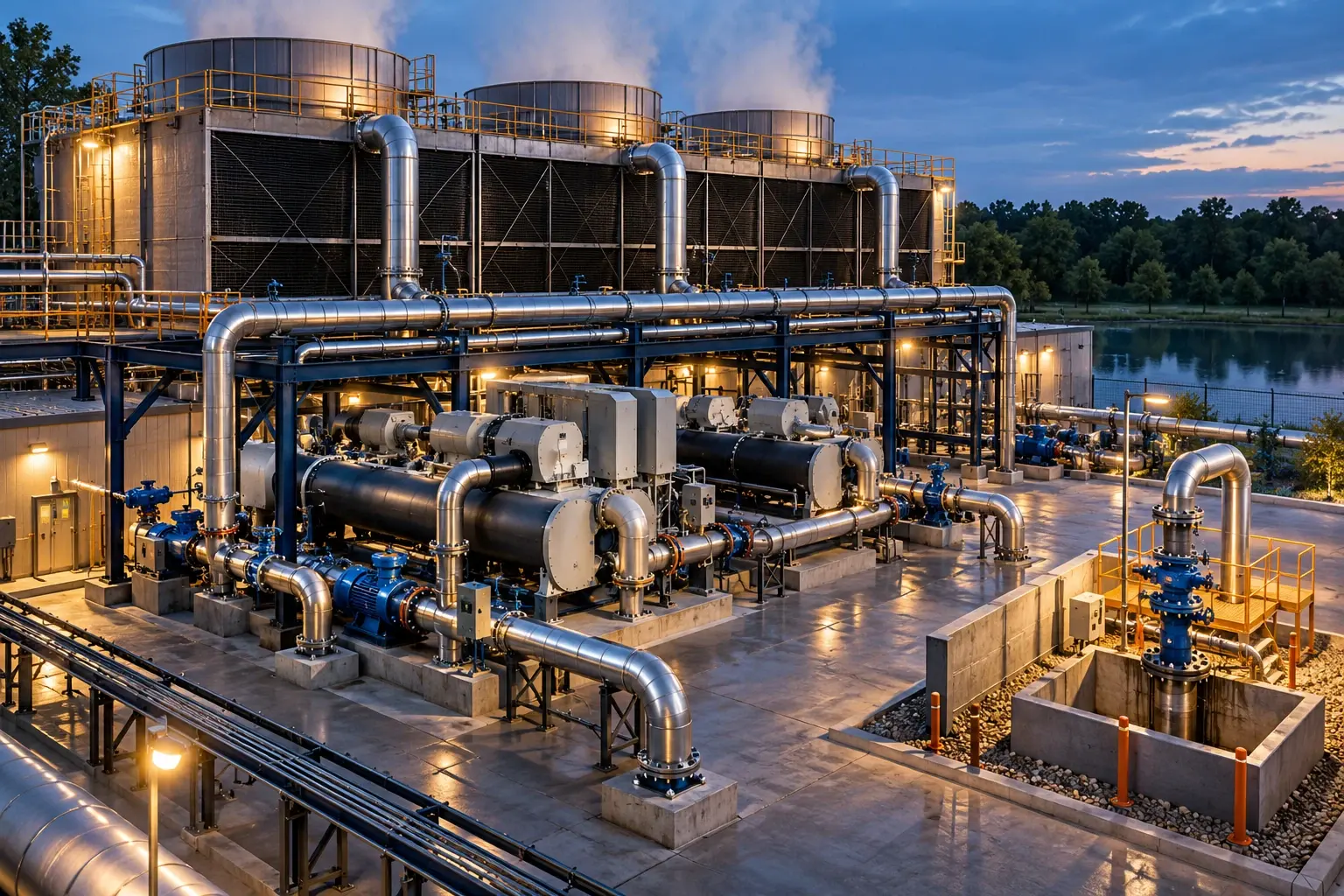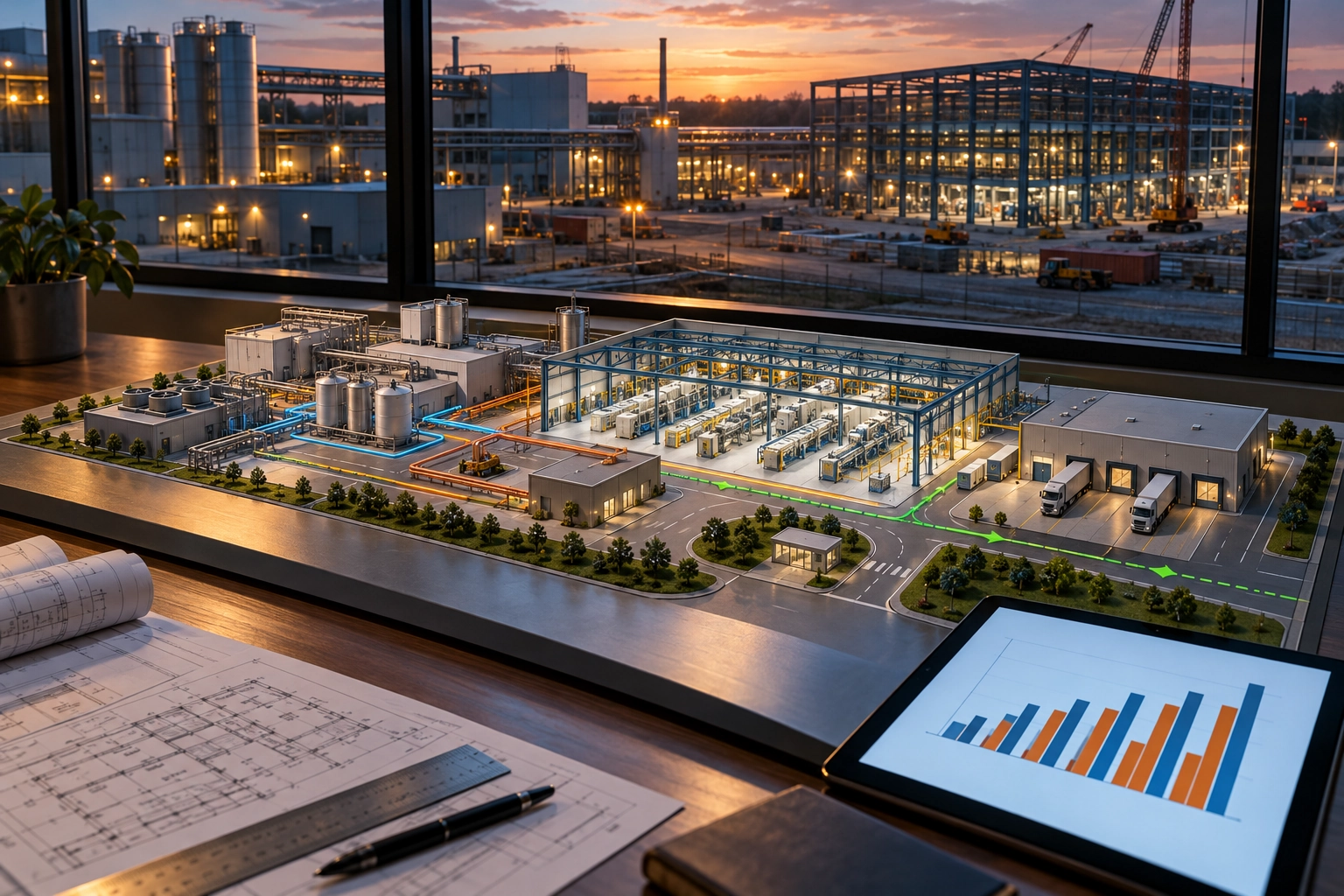
Capital Strategy and Business Alignment
Translate Growth Forecasts, Customer Demand, Operating Constraints, and Asset Condition into Capital Priorities
Engineering practice and documented application
 APOLLO AUTOMATIONJAMES WARREN · ENGINEERING & PROJECT LEADERSHIP
PRJ-A-023 · Food and beverage manufacturer
Owned the full lifecycle of this project, connecting capital planning, engineering, delivery and operating readiness. Cooling-water reliability involved heat removal, water treatment, controls and the discharge path. The primary implementation required those interfaces to be understood together before choosing the engineering approach.
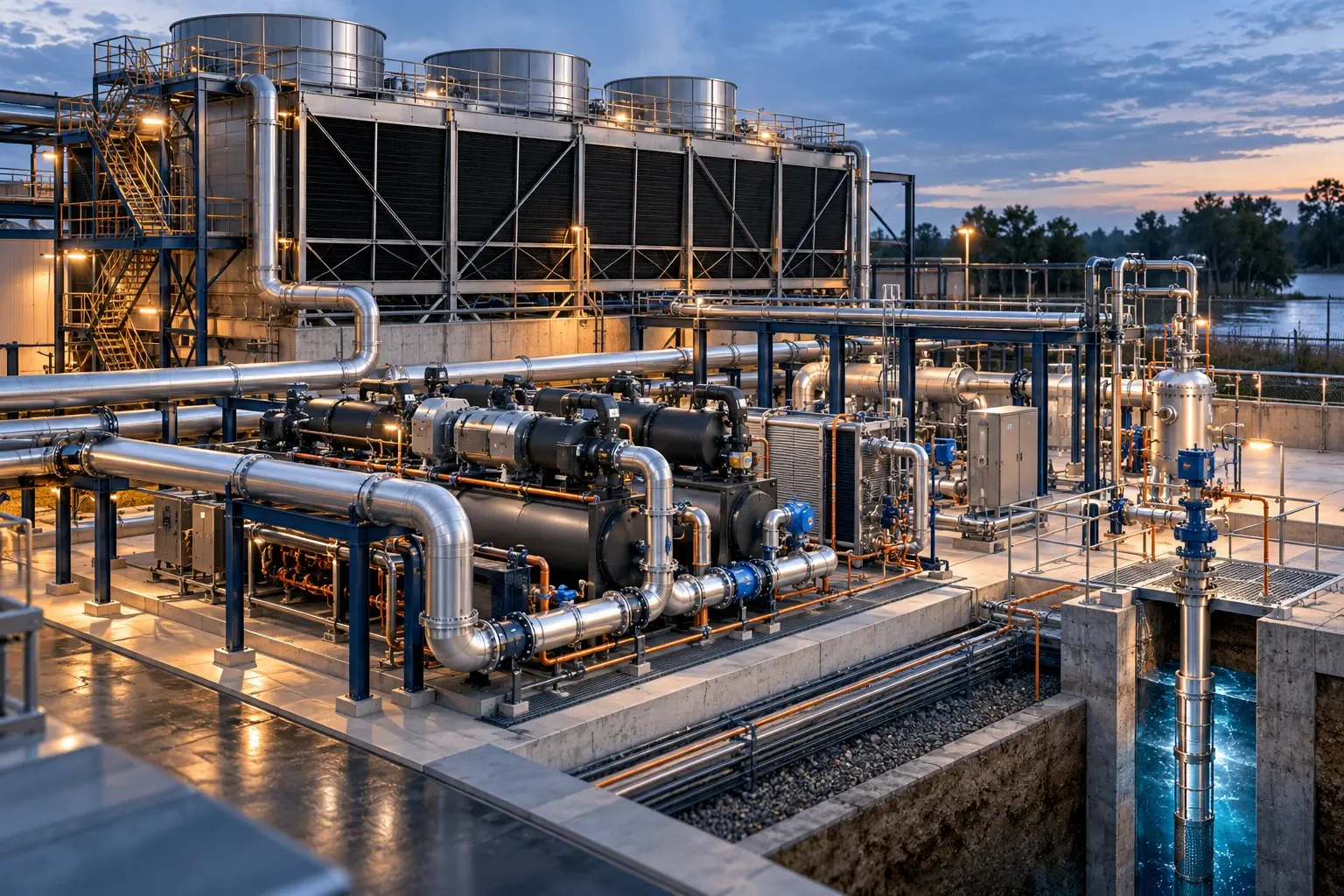
Workstream: Cooling and Utility Reliability Modernization
Cooling-water reliability involved heat removal, water treatment, controls and the discharge path. The primary implementation required those interfaces to be understood together before choosing the engineering approach.
Owned the cooling-tower, chiller-circuit and injection-well project lifecycle. His work connected hydraulic analysis, P&IDs, equipment and controls requirements, capital justification, contractor coordination, field sequencing and acceptance criteria. The detailed engineering story below explains how the design evolved around the operating problem.
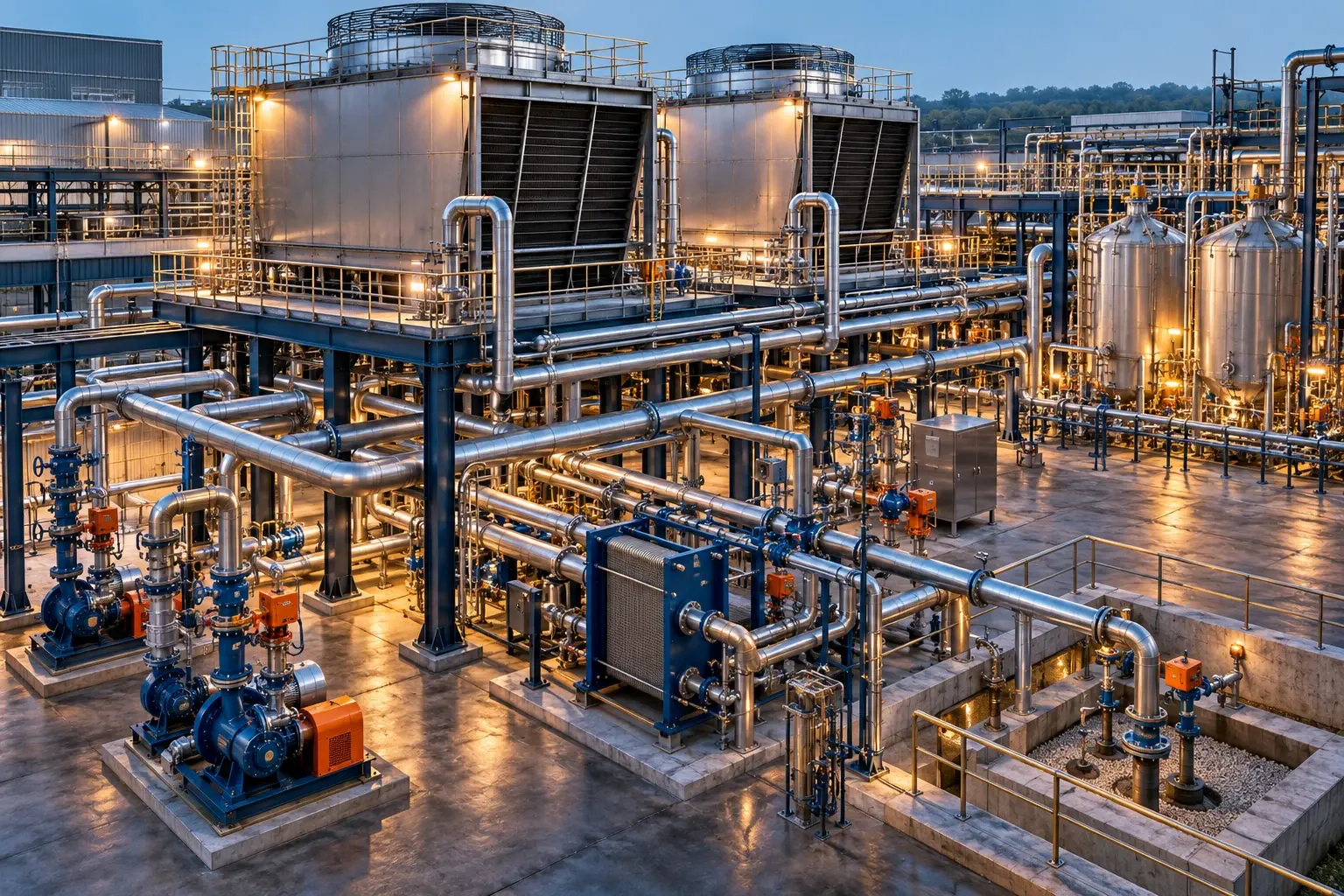
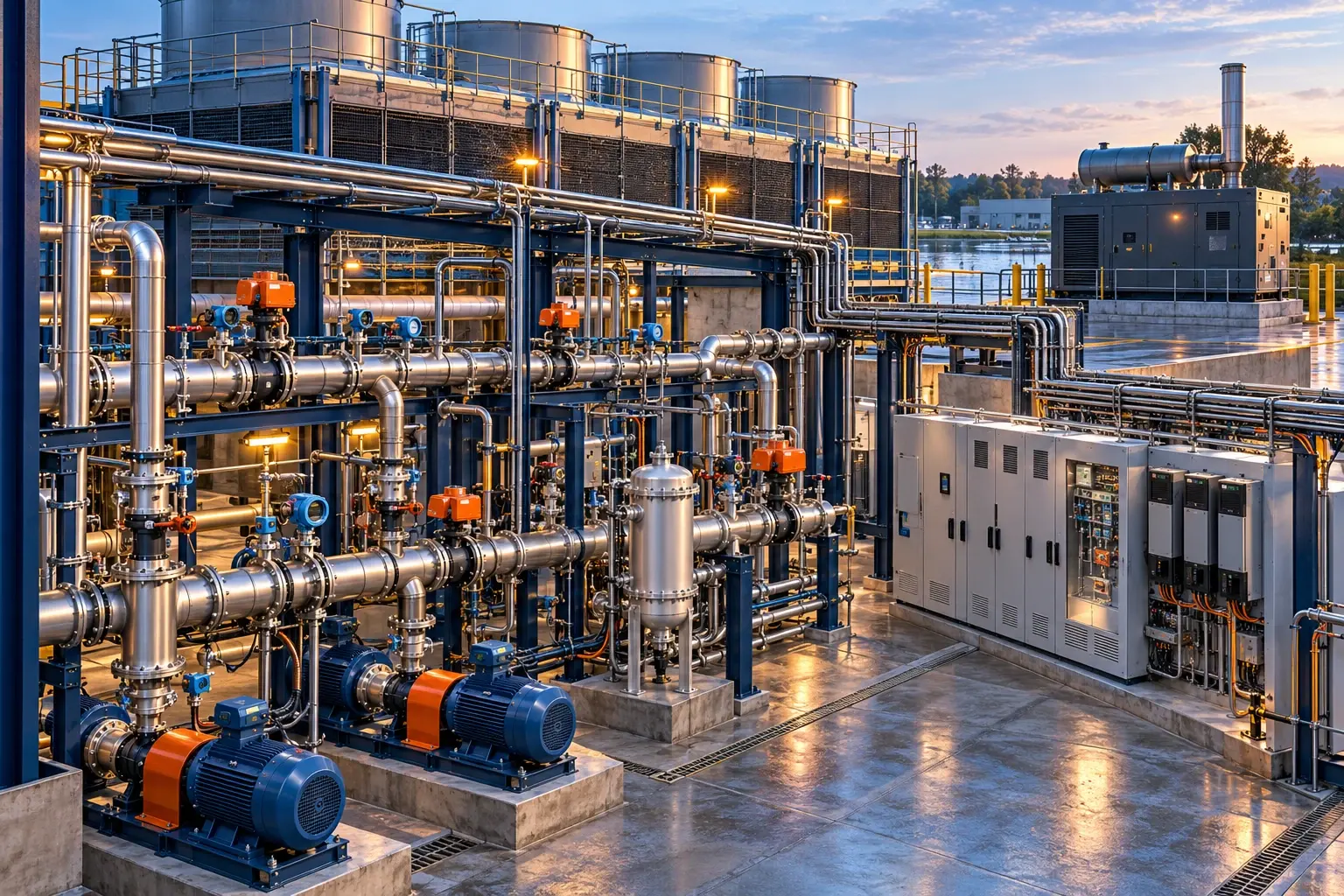
This initiative belongs to the Cooling and Utility Reliability Modernization workstream of the connected workstreams. The workstream connects chillers, cooling towers, pumping and utility interfaces with fermentation, acetation and process-cooling demand. The initiative covers seven implementation entries across five manufacturing-facility contexts. Its engineering brings together tower and chiller replacement, injection-well cooling-water returns, BAS and PLC controls, and variable-speed pump and fan design. The following sections explain the primary implementation in detail; equipment, loads and constraints vary between facilities.
Fermenter cooling used once-through water. When the existing injection well could not accept the return flow, the cooling water went to the municipal sewer, creating a compliance exposure. Fermenters 14 and 18 also required improved temperature control, while the acetator cooling tower needed attention. Treated discharge, cooling capacity and control reliability as connected requirements when defining the capital scope.
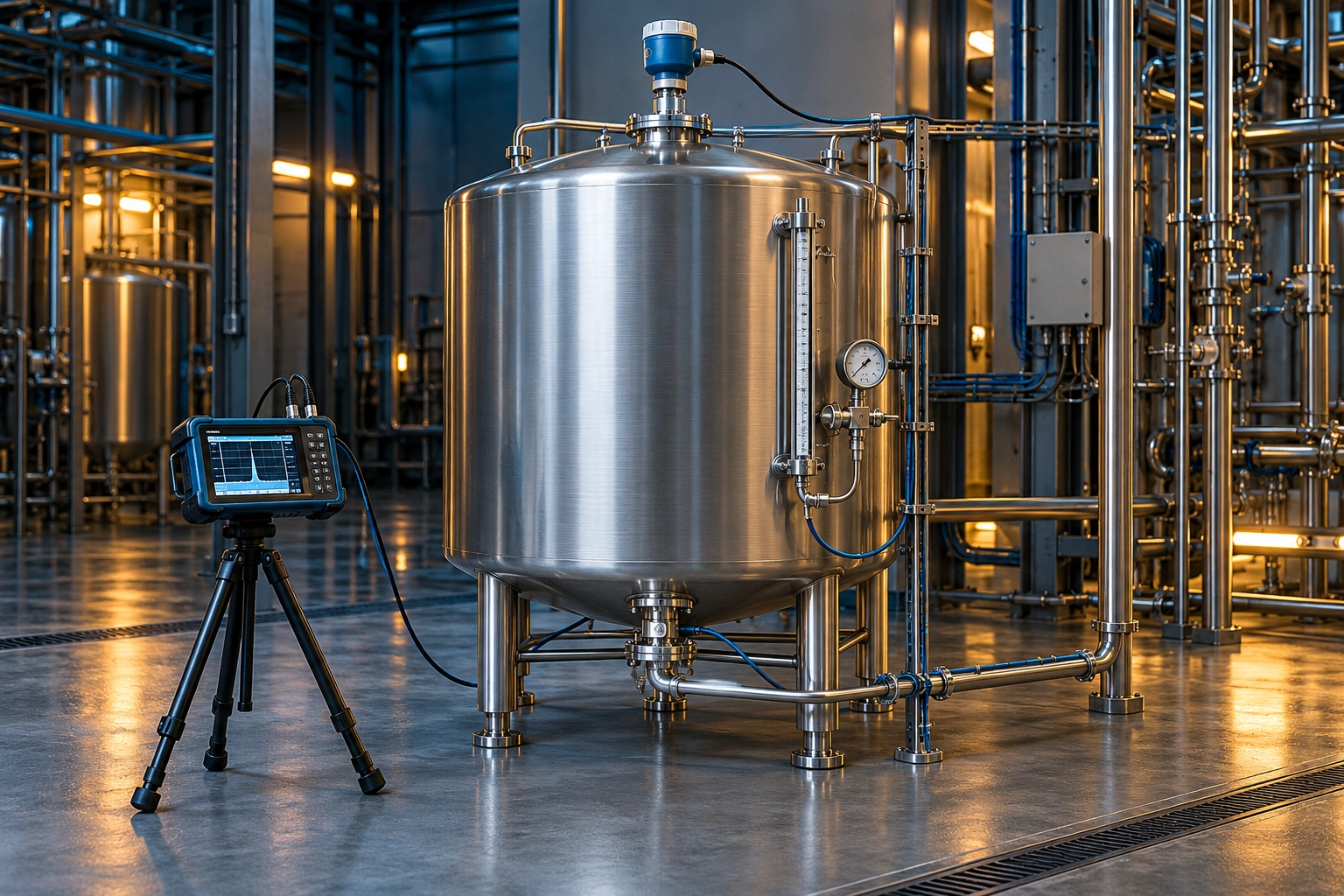
The engineering review captured well capacity, pump performance, header routing and the connections serving the fermenter groups. The system included a 500 gpm well pump, three-inch headers, city-water backup and an existing tower with a 15 hp drive. Layout review established how the cooling circuits, process equipment and utility interfaces constrained replacement equipment and construction access.
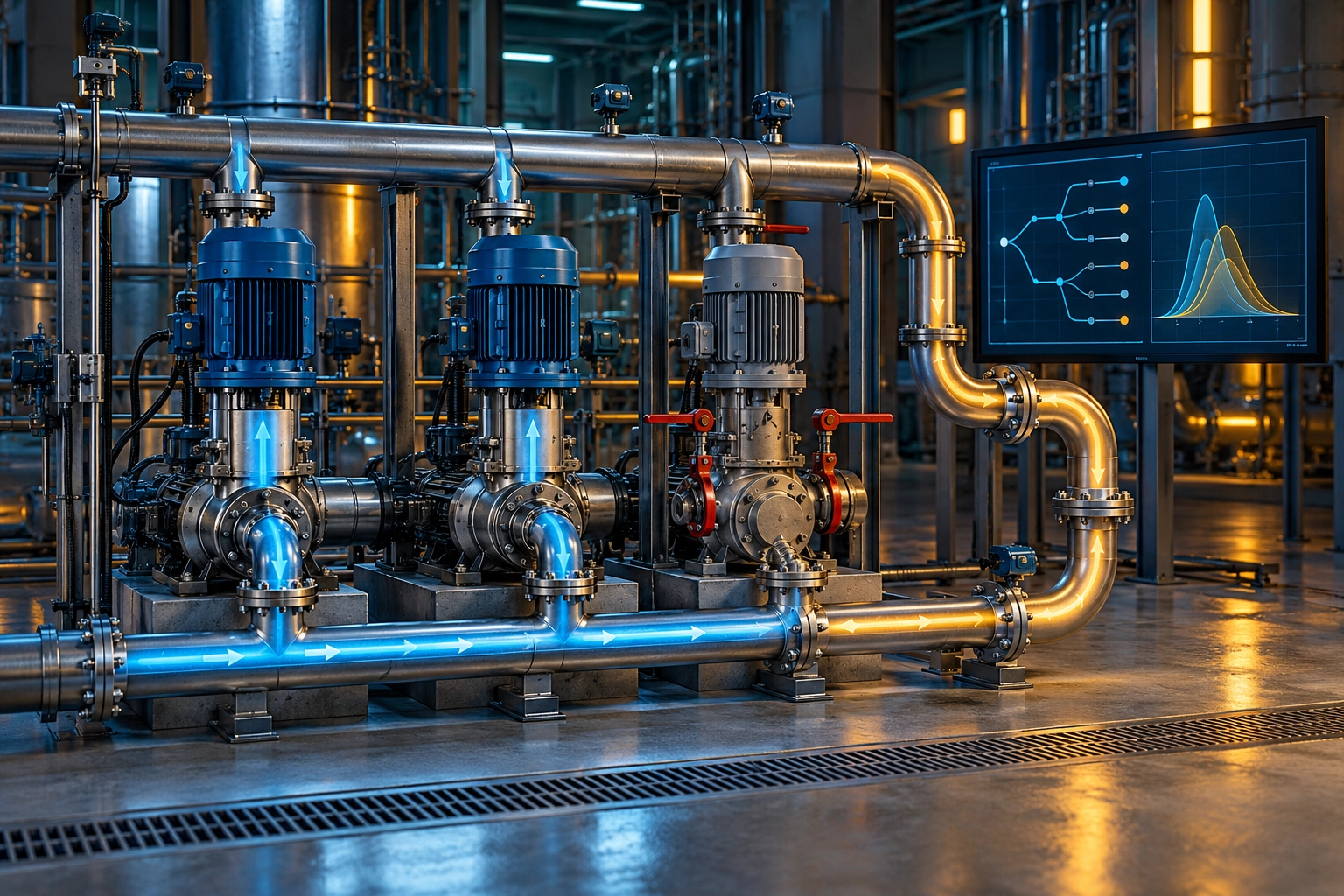
Design a modernized tower-chiller loop with VFD control to restore cooling capacity and reduce kWh per ton.
Chillers, PLC/HMI and Variable-Speed Drives
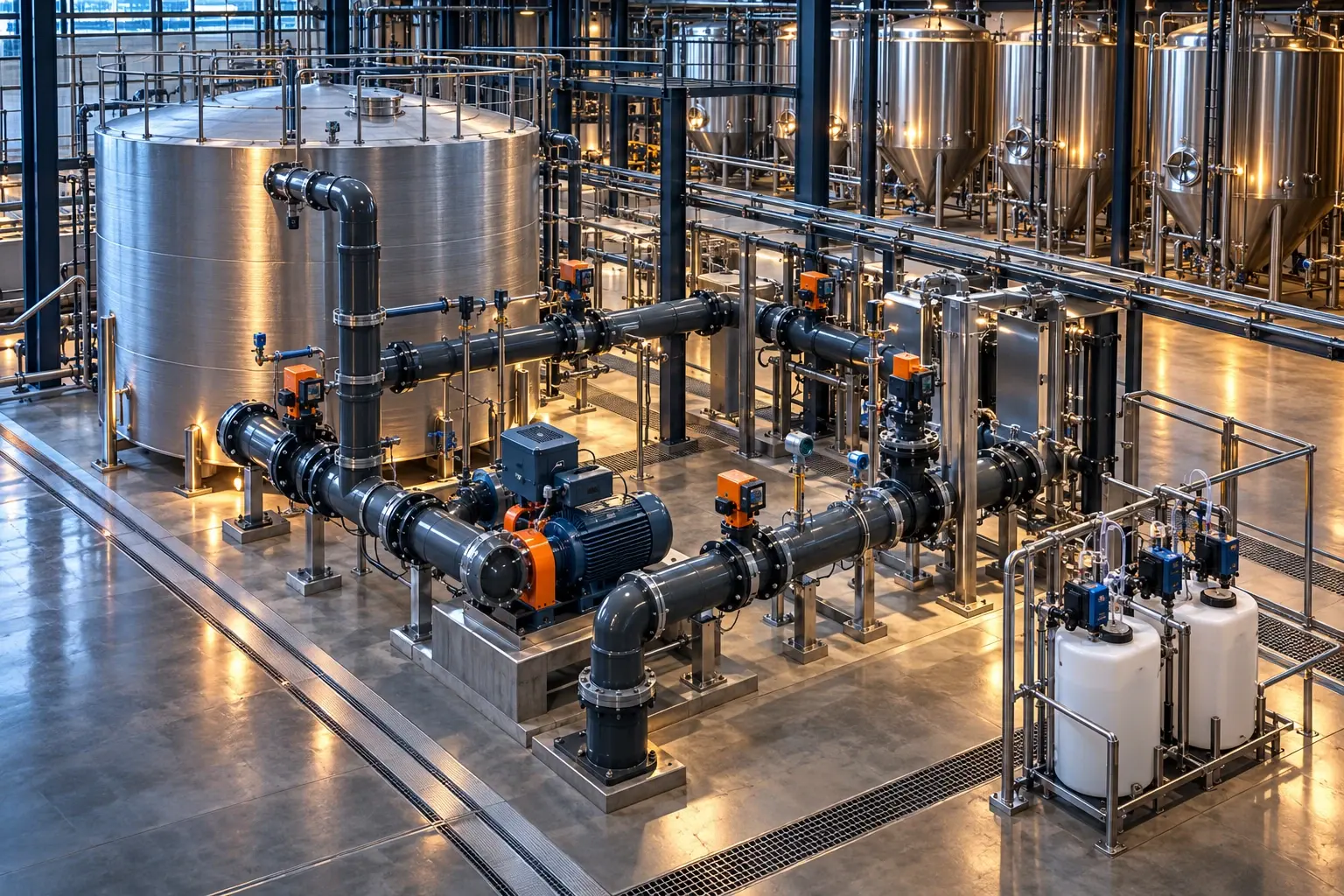
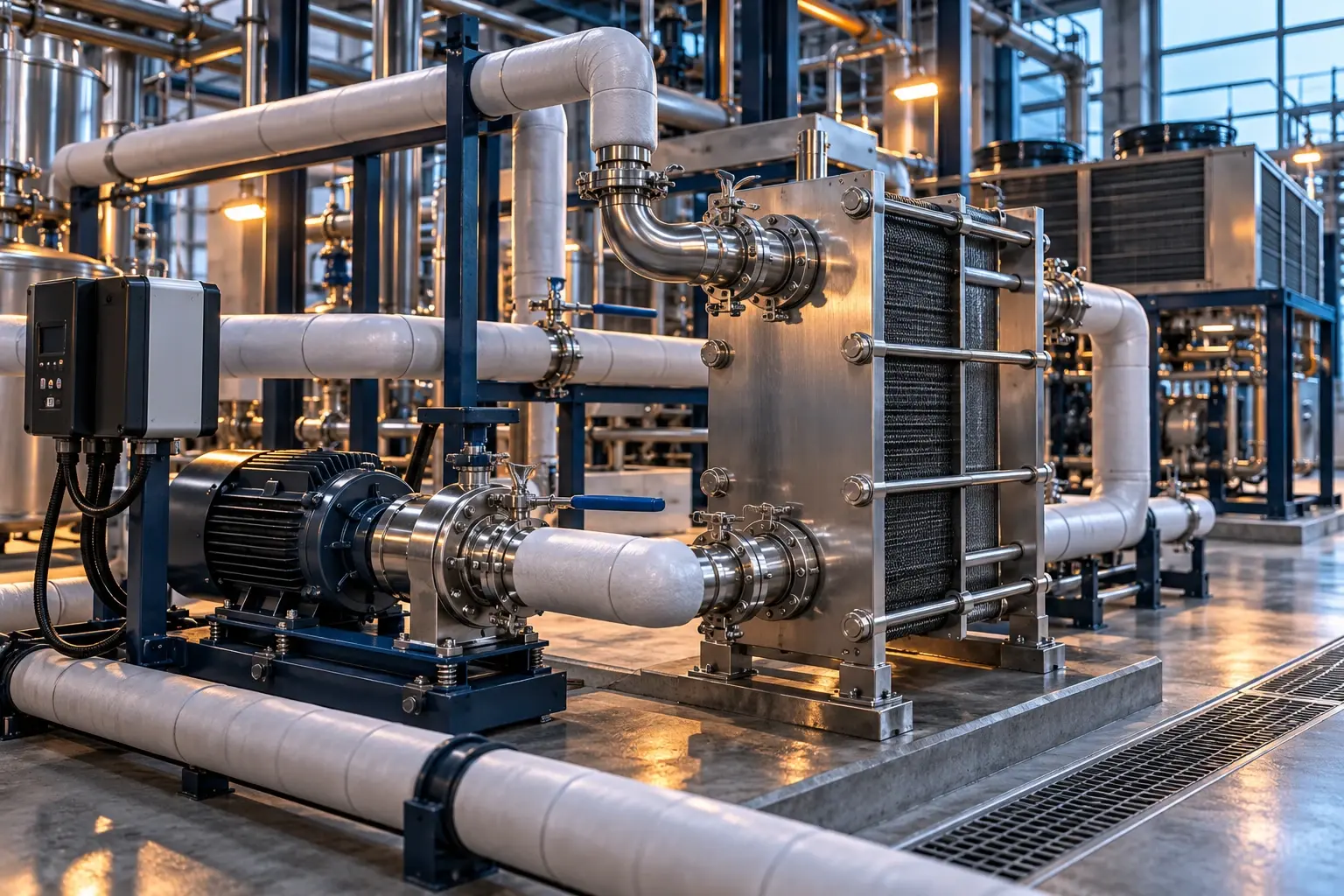
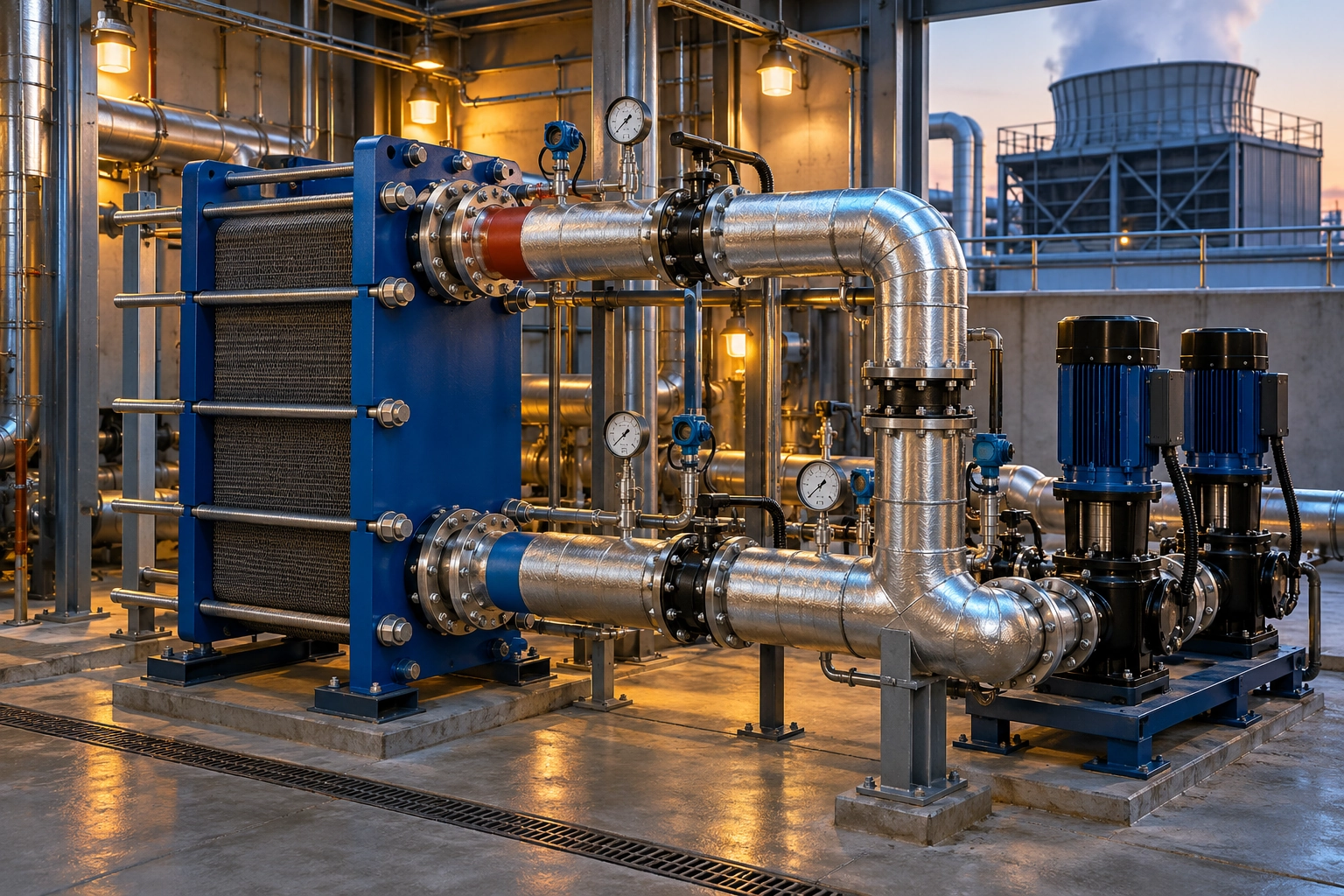
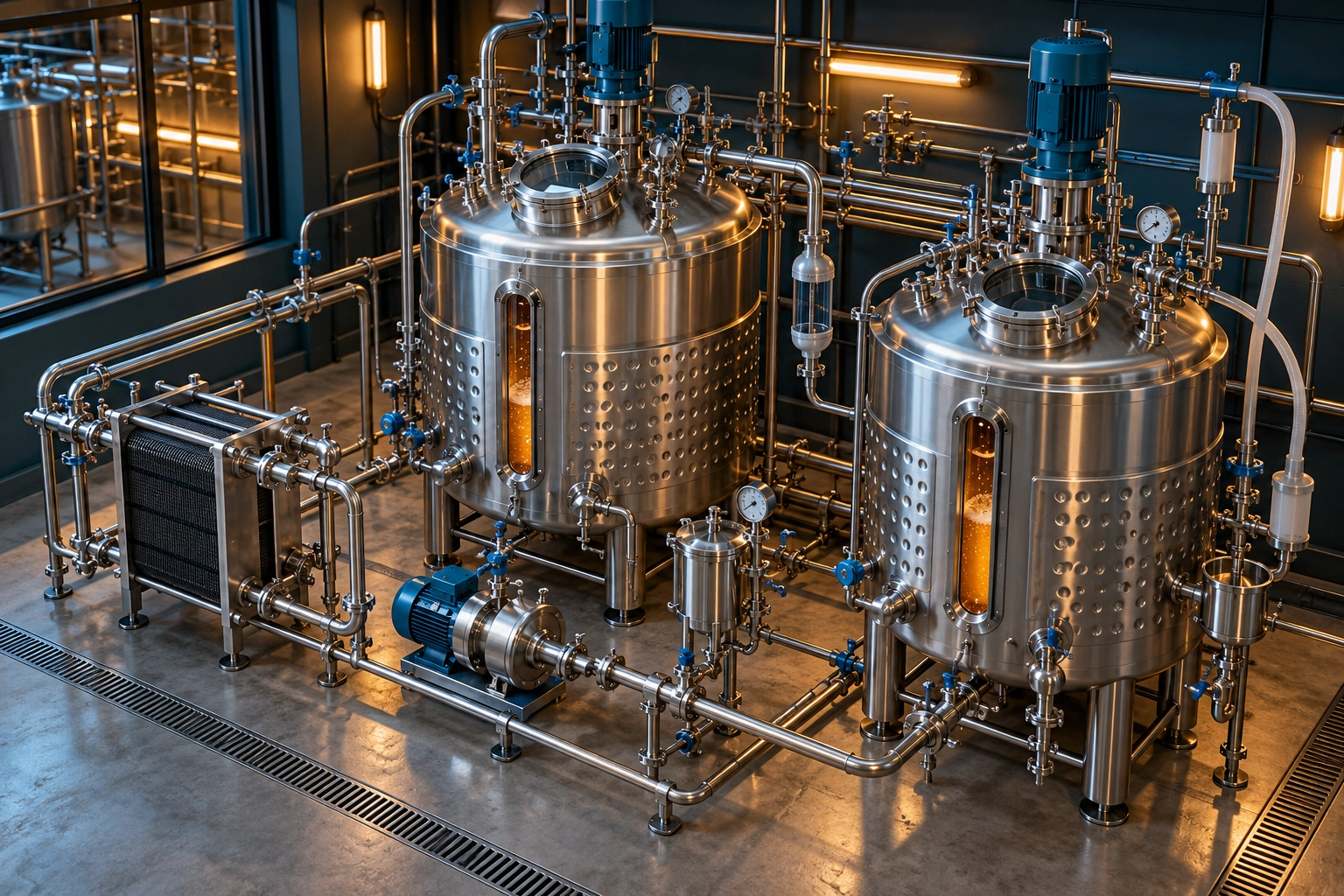
Developed the tower-loop and heat-exchanger arrangement with an 8,000-gallon tank, variable-speed pumps, a modulating bypass and pressure feedback. The controls scope included RTDs, flow and level measurements, remote I/O and HMI visibility. Separators, plate heat exchangers and spare-chiller interfaces connected water quality, maintainability and backup capacity with the cooling design. Tower selection was refined against flow, temperature and wet-bulb conditions.
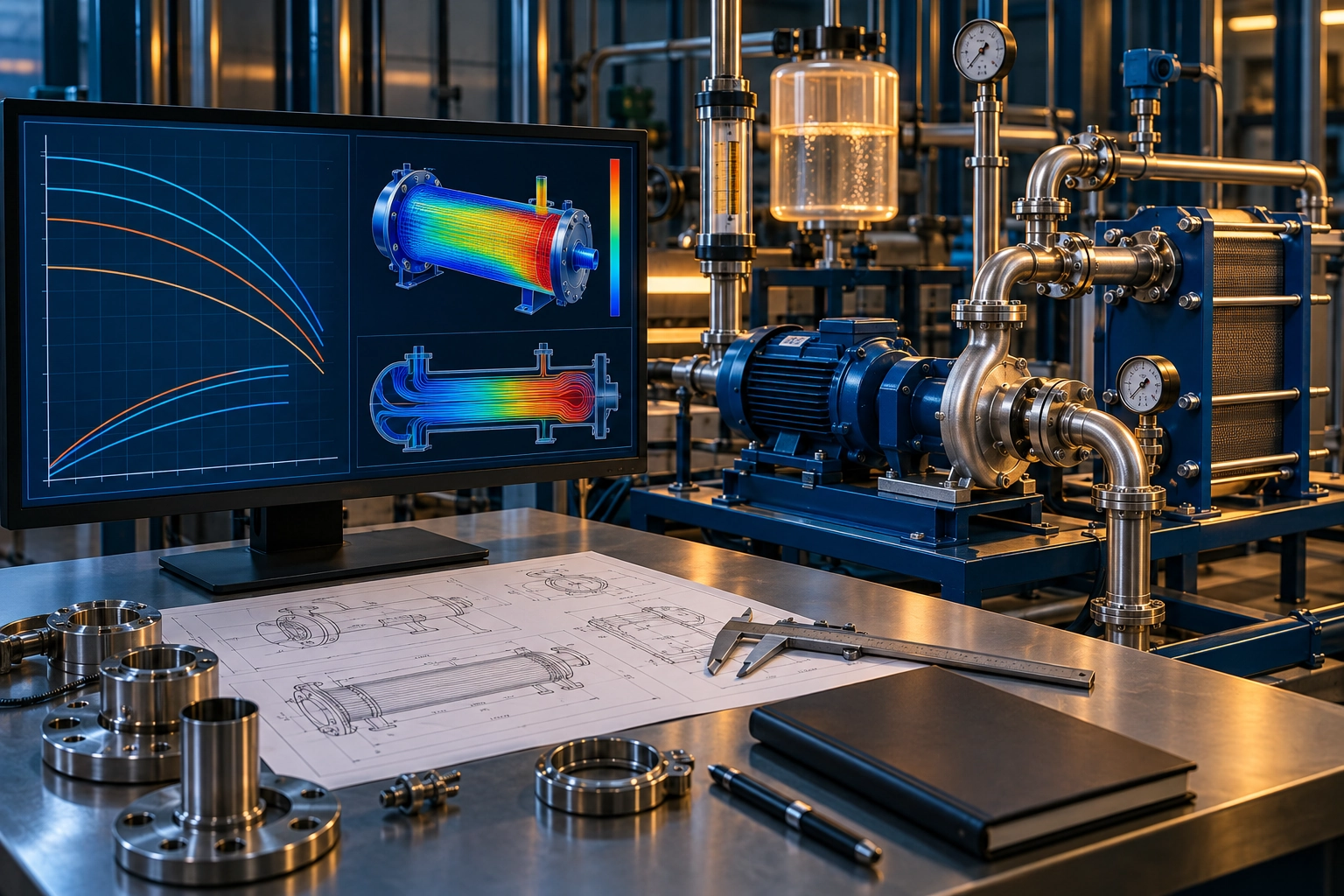
The hydraulic work compared header and coil requirements, pressure losses and pump selections. A 300 gpm header basis and 75 gpm coil branches informed the analysis. Comparing head requirements of approximately 165, 120 and 80 feet helped evaluate piping and pumping alternatives and the associated motor demand. Metering, bleed and chemical-feed requirements were developed alongside the mechanical design so that treatment and operating control would support the cooling equipment.
The compliance exposure depended on the destination of the fermenter cooling water. redirected the fermenter scope toward a second injection well alongside the existing well, while retaining the tower and heat-exchanger engineering for the acetator system. Comparing this approach with the tower arrangement and continued discharge brought environmental requirements, geological uncertainty, maintainability and process needs into the capital decision.
The injection-well scope included twelve-inch casing, drilling below the casing, a six-inch inter-well connection and a maintenance bypass. Fermenters 14 and 18 were integrated into the temperature-control scope. Connected capital justification, purchase orders and contractor coordination with elevation checks, valve arrangements, flow recording and field sequencing. These details made the design usable for installation, operation and maintenance.
The acceptance basis called for the new well to receive 25–50 gpm of cooling-water return. Bypass arrangements, transfer behavior and controller operation formed part of the verification scope. The project demonstrates how Connected environmental exposure with hydraulic and controls decisions: returning fermenter water to the ground addressed the discharge problem, while the acetator tower engineering addressed the separate cooling need.
Full lifecycle project ownership
Owned the full project lifecycle: capital planning and prioritization, need definition, feasibility and scope development, engineering and AFE justification, procurement and vendor coordination, construction sequencing and field oversight, commissioning, turnover, and post-startup support. Connected operating requirements with technical scope, funding decisions, execution readiness, and the needs of operations and maintenance.
Capital Strategy and Business Alignment
Engineering practice and documented application
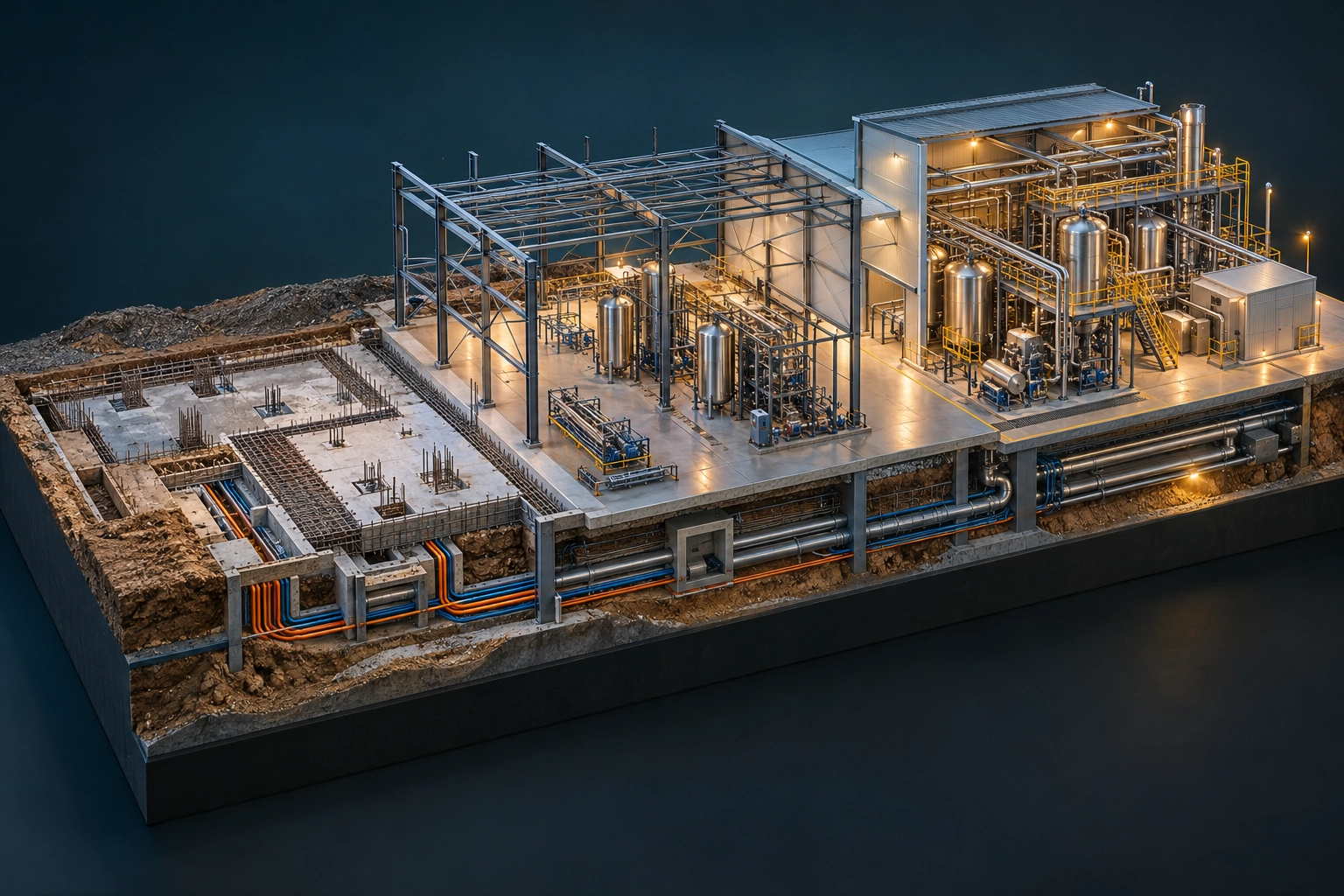
Project Lifecycle, FEL, and Execution Models
Engineering practice and documented application
Action
Applies capabilities
Risk, Uncertainty, and Decision Support
Engineering practice and documented application
TSK-000897 · Action
Cooling Tower, Chiller Circuit, and Injection Well Retrofit
Recorded applicationOwned capital planning and the full delivery lifecycle. The cards connect the applicable responsibilities with the recorded work.
Capital Strategy and Business Alignment
Engineering practice and documented application
Project Lifecycle, FEL, and Execution Models
Engineering practice and documented application
Investment Economics and Lifecycle Analysis
Engineering practice and documented application
Risk, Uncertainty, and Decision Support
Engineering practice and documented application
Risk, Uncertainty, and Decision Support
Engineering practice and documented application
TSK-000897 · Action
Cooling Tower, Chiller Circuit, and Injection Well Retrofit
Recorded application
Statistical Quality, Measurement Systems, and Sampling
Academic preparation and analytical method
Statistical Quality, Measurement Systems, and Sampling
Academic preparation and analytical method
Statistical Quality, Measurement Systems, and Sampling
Academic preparation and analytical method
Optimization and Operations Research
Engineering practice and documented application
Forecasting, Inventory, Supply Chain, and Logistics
Academic preparation and analytical method
Stochastic Models and Uncertainty Analytics
Academic preparation and analytical method
Stochastic Models and Uncertainty Analytics
Academic preparation and analytical method
Lean Six Sigma, Quality Systems, and Governance Maturity
Engineering practice and documented application
Investment Economics and Lifecycle Analysis
Engineering practice and documented application
Thermal/Hydraulic Analysis and Engineering-Calculation Review
Engineering practice and documented application
Thermal/Hydraulic Analysis and Engineering-Calculation Review
Engineering practice and documented application
Thermal/Hydraulic Analysis and Engineering-Calculation Review
Engineering practice and documented application
Thermal/Hydraulic Analysis and Engineering-Calculation Review
Engineering practice and documented application
TSK-000229 · Action
Acetator Chiller-Circuit and Plate-Heat-Exchanger Coordination
Optimization and Operations Research
Engineering practice and documented application
Chillers, Cooling Towers, and Process Cooling
Engineering practice and documented application
Chillers, Cooling Towers, and Process Cooling
Engineering practice and documented application
Chillers, Cooling Towers, and Process Cooling
Engineering practice and documented application
Chillers, Cooling Towers, and Process Cooling
Engineering practice and documented application
Chillers, Cooling Towers, and Process Cooling
Engineering practice and documented application
BAS, Utility Automation, and Alarm Systems
Engineering practice and documented application
TSK-000227 · Action
$1.2M Cooling Tower, Chiller Circuit, and Injection Well System Retrofit
TSK-000228 · Action
Fermenter Cooling Loop Upgrade
TSK-000229 · Action
Acetator Chiller-Circuit and Plate-Heat-Exchanger Coordination
TSK-000236 · Action
Cooling Tower Controls, Instrumentation, Chemical Feed, and Separator Coordination
TSK-000237 · Method
Cooling Tower Controls, Instrumentation, Chemical Feed, and Separator Coordination
TSK-000244 · Technical context
Cooling Tower, Chiller Circuit, and Injection Well Retrofit
TSK-000895 · Action
Cooling Tower, Chiller Circuit, and Injection Well Retrofit
Recorded applicationControl Panels, BOMs, Fabrication, and Shipment
Engineering practice and documented application
PLC, HMI, SCADA, Drives, and Process Automation
Engineering practice and documented application
PLC, HMI, SCADA, Drives, and Process Automation
Engineering practice and documented application
PLC, HMI, SCADA, Drives, and Process Automation
Engineering practice and documented application
TSK-000236 · Action
Cooling Tower Controls, Instrumentation, Chemical Feed, and Separator Coordination
TSK-000237 · Method
Cooling Tower Controls, Instrumentation, Chemical Feed, and Separator Coordination
TSK-000244 · Technical context
Cooling Tower, Chiller Circuit, and Injection Well Retrofit
TSK-000896 · Action
Cooling Tower, Chiller Circuit, and Injection Well Retrofit
Recorded applicationInstrumentation, Measurement, and Standards
Engineering practice and documented application
Instrumentation, Measurement, and Standards
Engineering practice and documented application
TSK-000236 · Action
Cooling Tower Controls, Instrumentation, Chemical Feed, and Separator Coordination
TSK-000237 · Method
Cooling Tower Controls, Instrumentation, Chemical Feed, and Separator Coordination
TSK-000897 · Action
Cooling Tower, Chiller Circuit, and Injection Well Retrofit
Recorded application
Electrical Testing, Standby Power, and Energization
Engineering practice and documented application
TSK-000236 · Action
Cooling Tower Controls, Instrumentation, Chemical Feed, and Separator Coordination
TSK-000237 · Method
Cooling Tower Controls, Instrumentation, Chemical Feed, and Separator Coordination
BAS, Utility Automation, and Alarm Systems
Engineering practice and documented application
TSK-000236 · Action
Cooling Tower Controls, Instrumentation, Chemical Feed, and Separator Coordination
TSK-000237 · Method
Cooling Tower Controls, Instrumentation, Chemical Feed, and Separator Coordination
Cooling ownership covered chillers, towers, pumps, circulation, heat exchangers and water treatment. Load and hydraulic analysis informed equipment and loop design, while VFDs, BAS and PLC interfaces connected performance with operating visibility. Installation sequencing and verification aligned the utility changes with process demand.
Chillers, Cooling Towers, and Process Cooling
Engineering practice and documented application
Chillers, Cooling Towers, and Process Cooling
Engineering practice and documented application
Chillers, Cooling Towers, and Process Cooling
Engineering practice and documented application
Chillers, Cooling Towers, and Process Cooling
Engineering practice and documented application
Chillers, Cooling Towers, and Process Cooling
Engineering practice and documented application
BAS, Utility Automation, and Alarm Systems
Engineering practice and documented application
Action
Applies capabilities
Process-side separation and recovery reduced product loss and the load reaching wastewater. Environmental work also included runoff and sediment control, vapor exposure mitigation and acetator emissions capture. Connected these requirements with production continuity, equipment interfaces and maintainable safeguards.
Storage and dosing systems were treated as connected processes involving tanks, piping, metering, refill arrangements, instrumentation and control verification. Nitrogen modernization linked cryogenic handling with packaging demand; cooling-water treatment linked chemical feed and bleed control with the performance and maintainability of the utility system.
BAS, Utility Automation, and Alarm Systems
Engineering practice and documented application
Coordinated cooling-water controls, instruments, variable-speed pumping, alarms, and commissioning in live operations; Source-controlled performance and commissioning evidence
Review thermal/hydraulic calculations and, for implemented equipment, normalize field trends and energy per ton to the cooling load.
Utilities / Reliability.
Capital authorization, cutover sequencing, QA/QC, commissioning planning and risk-register review.
TSK-000227 · Action
$1.2M Cooling Tower, Chiller Circuit, and Injection Well System Retrofit
TSK-000228 · Action
Fermenter Cooling Loop Upgrade
TSK-000229 · Action
Acetator Chiller-Circuit and Plate-Heat-Exchanger Coordination
TSK-000236 · Action
Cooling Tower Controls, Instrumentation, Chemical Feed, and Separator Coordination
TSK-000237 · Method
Cooling Tower Controls, Instrumentation, Chemical Feed, and Separator Coordination
TSK-000244 · Technical context
Cooling Tower, Chiller Circuit, and Injection Well Retrofit
TSK-000895 · Action
Cooling Tower, Chiller Circuit, and Injection Well Retrofit
TSK-000896 · Action
Cooling Tower, Chiller Circuit, and Injection Well Retrofit
TSK-000897 · Action
Cooling Tower, Chiller Circuit, and Injection Well Retrofit
Workstream Portfolio Rollup
14,998,000 USD
Cooling and Utility Reliability Modernization
Recorded workstream portfolio reference. This is the workstream-level value and is not a project expenditure or a new total of reassigned projects.
| Measure or outcome | Value or result | Meaning and operating scope |
|---|---|---|
| Injection-Well Acceptance Flow | 25 to 50 GPM | Target Acceptance criterion Applies to: Cooling Tower, Chiller Circuit, and Injection Well Retrofit Primary-site acceptance test — Minimum cooling-water flow the new primary-site injection well was to accept under the authorization acceptance criteria. |
| Recorded outcome | Connected retrofit design, equipment interfaces, field coordination and operating requirements. | Cooling Tower, Chiller Circuit, and Injection Well Retrofit |
| Recorded outcome | Cooling restoration and lower kWh per ton informed the design and acceptance criteria. | Cooling Tower, Chiller Circuit, and Injection Well Retrofit |
CASE-087 · Engineering case
CASE-089 · Engineering case
CASE-094 · Engineering case
Coordinated instrumentation, valves, controls panels, chemical feed, and separator systems into the cooling retrofit.
Read the Case ↗CASE-099 · Engineering case
Developed a cooling-tower, chiller-circuit and injection-well retrofit.
Read the Case ↗Related facility implementations are part of this project. Their operating conditions, equipment and interfaces are considered within the same project lifecycle.