Capital Strategy and Business Alignment
Translate Growth Forecasts, Customer Demand, Operating Constraints, and Asset Condition into Capital Priorities
Engineering practice and documented application
 APOLLO AUTOMATIONJAMES WARREN · ENGINEERING & PROJECT LEADERSHIP
PRJ-A-033 · Food and beverage manufacturer
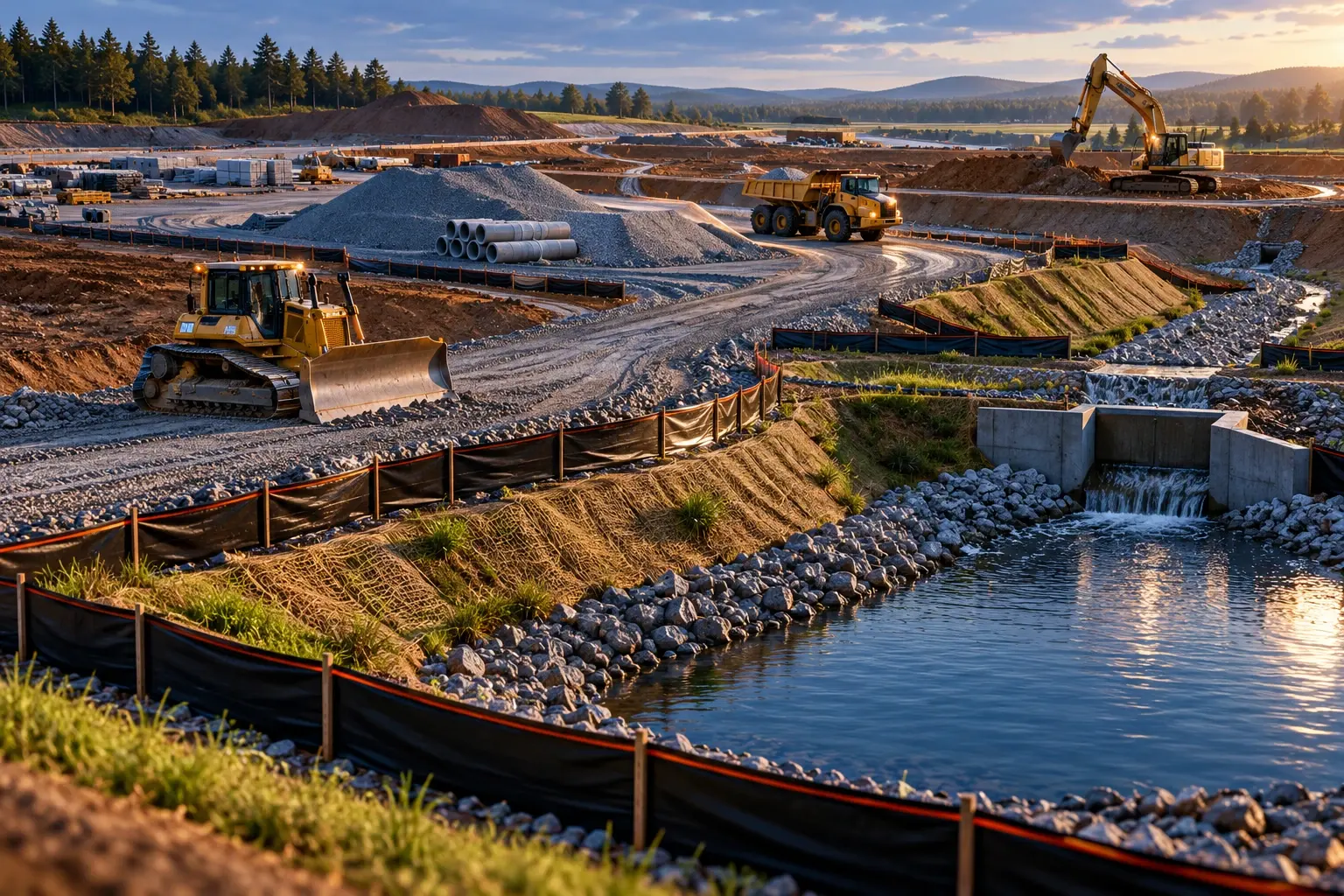
Owned the full lifecycle of this project, connecting capital planning, engineering, delivery and operating readiness. Drainage and erosion control protected the operating site as well as its surrounding infrastructure. Water conveyance, sediment control and slab stability had to be resolved alongside access and site-development interfaces.
Workstream: Environmental Compliance and Recovery Systems
Drainage and erosion control protected the operating site as well as its surrounding infrastructure. Water conveyance, sediment control and slab stability had to be resolved alongside access and site-development interfaces.
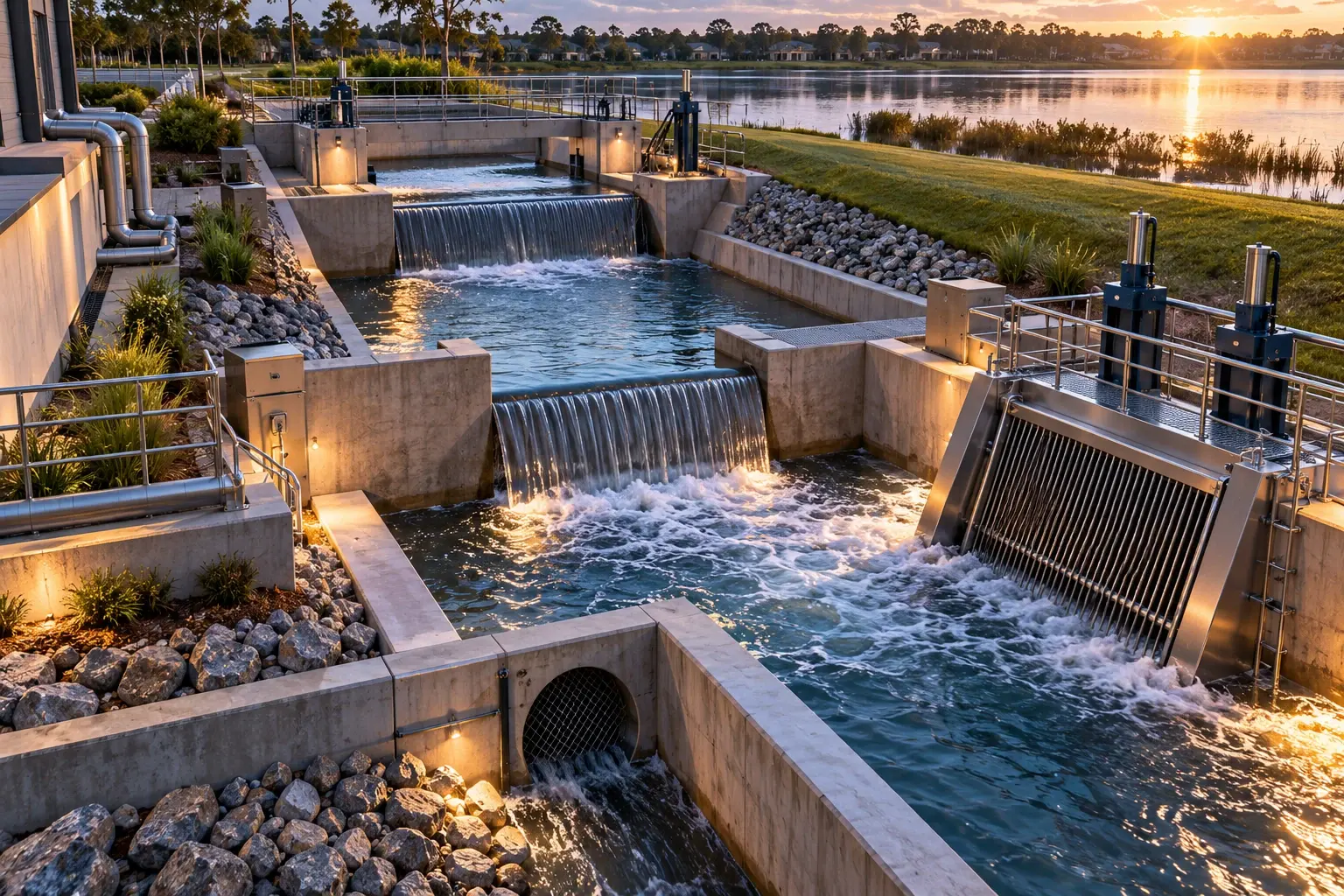
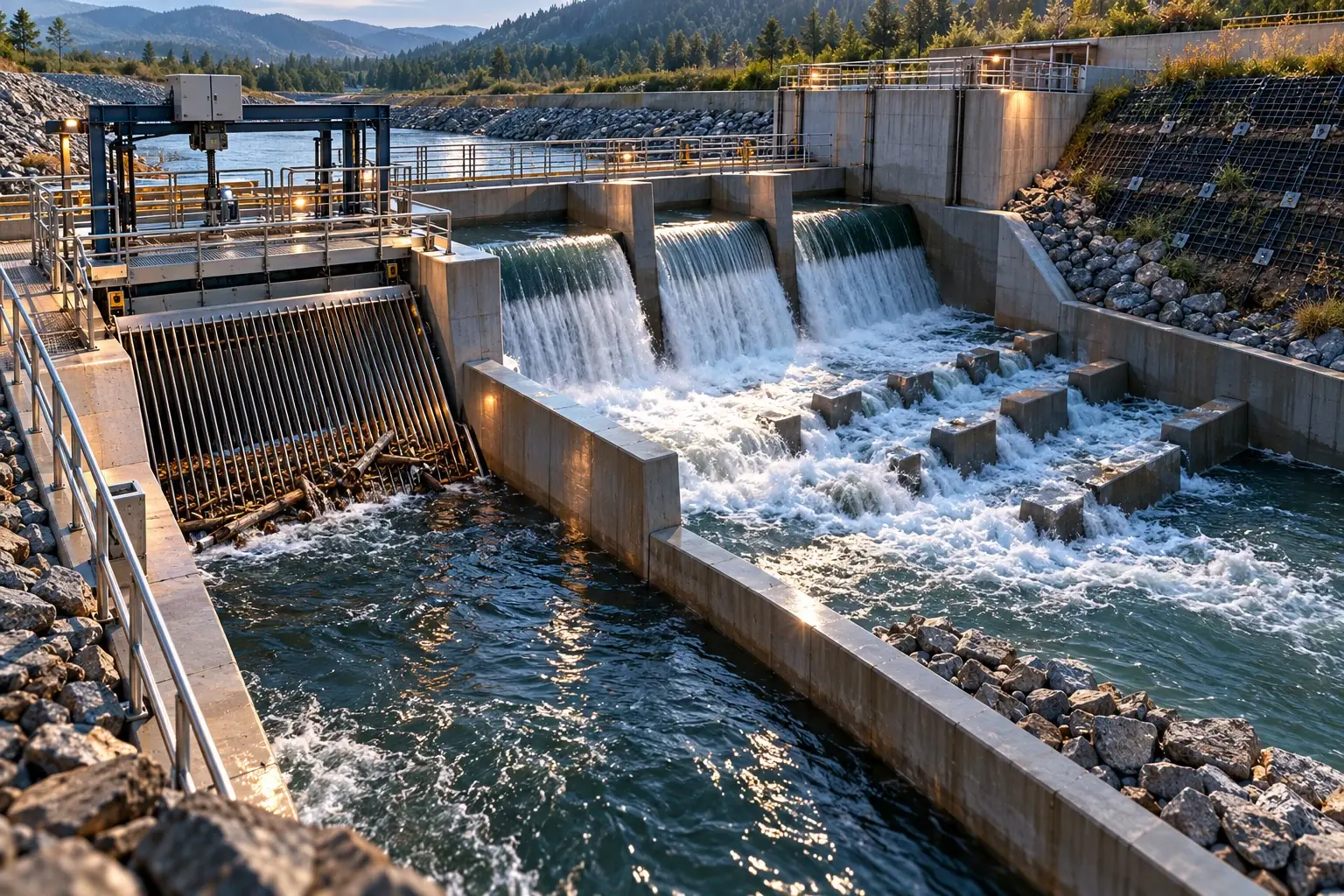
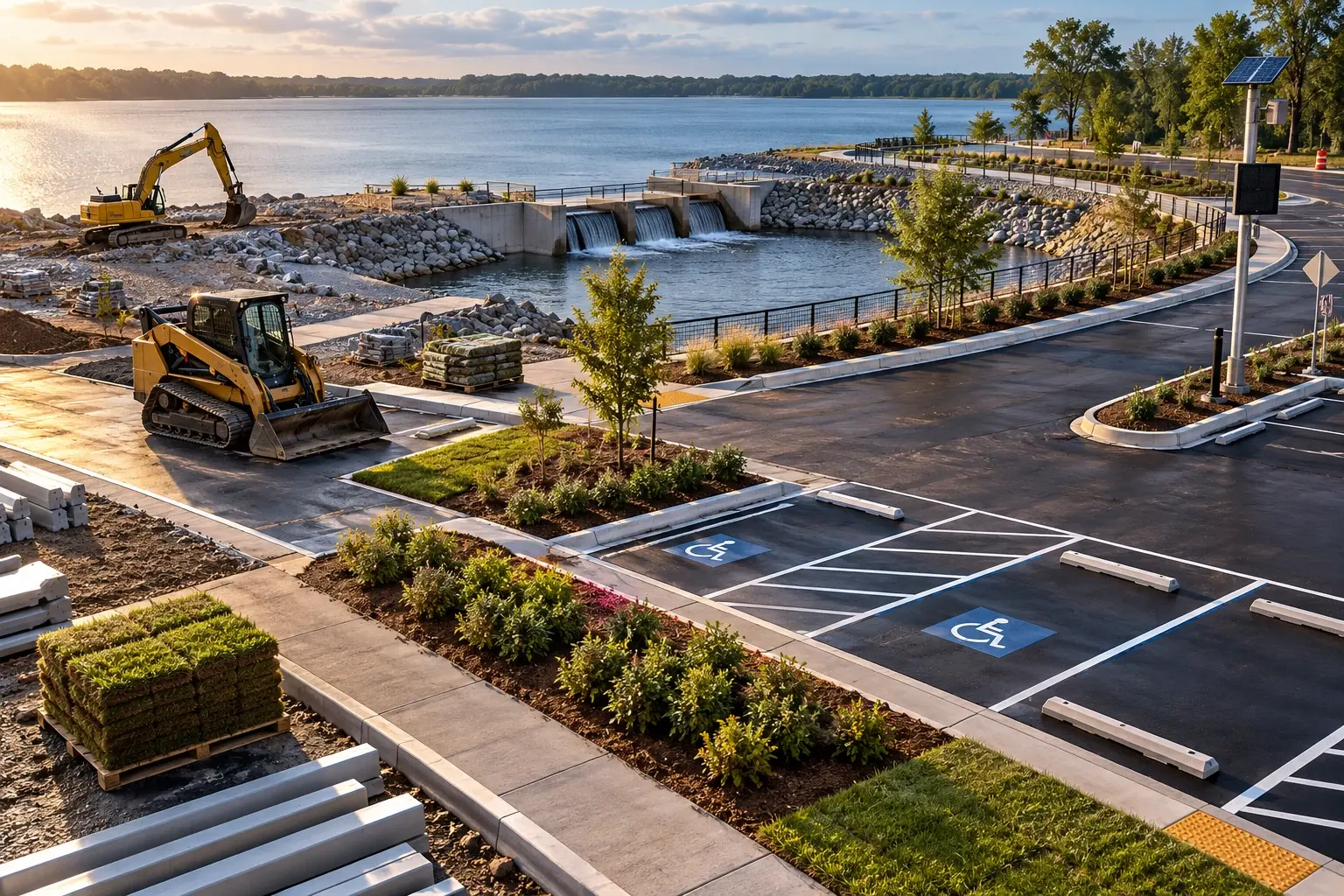
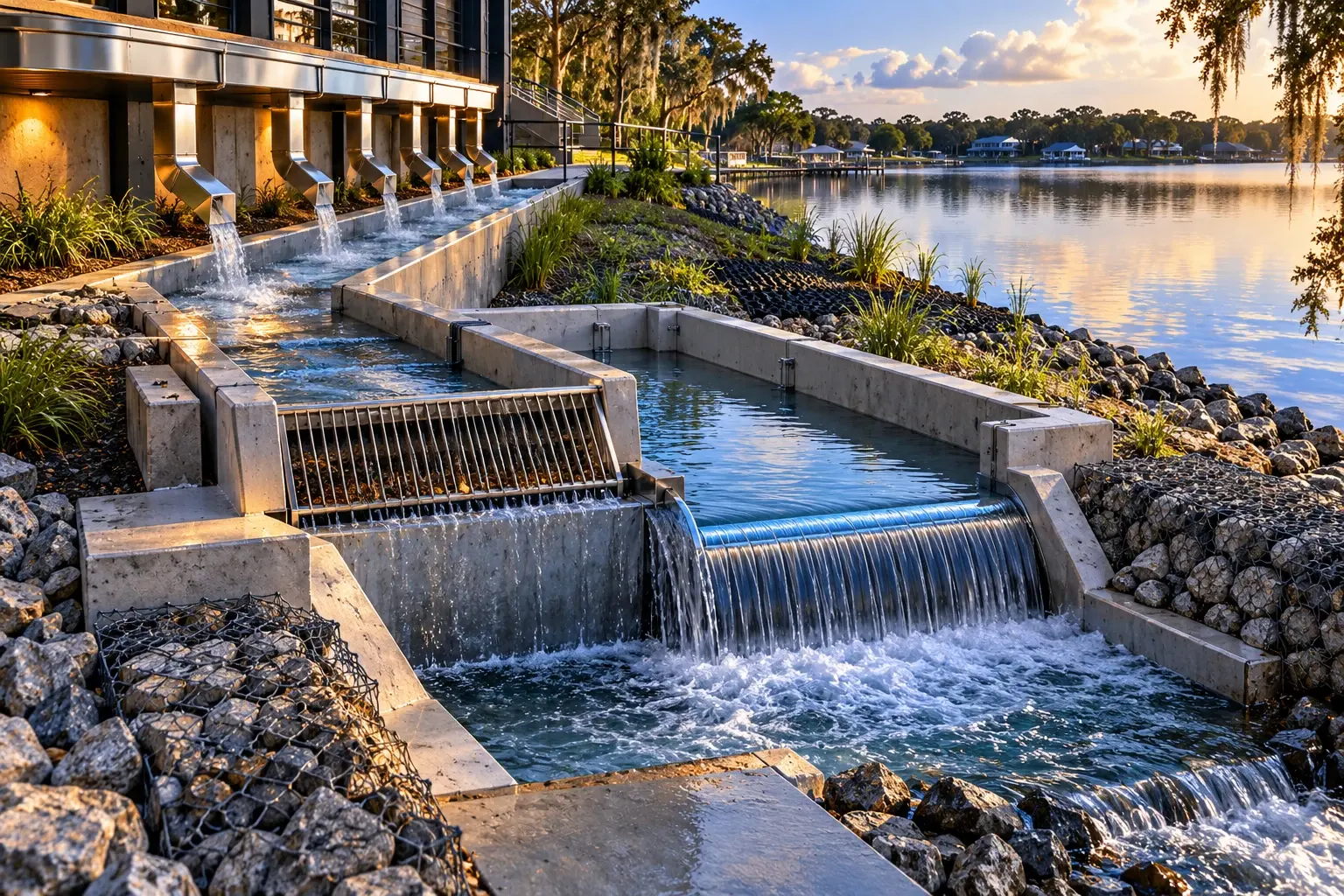
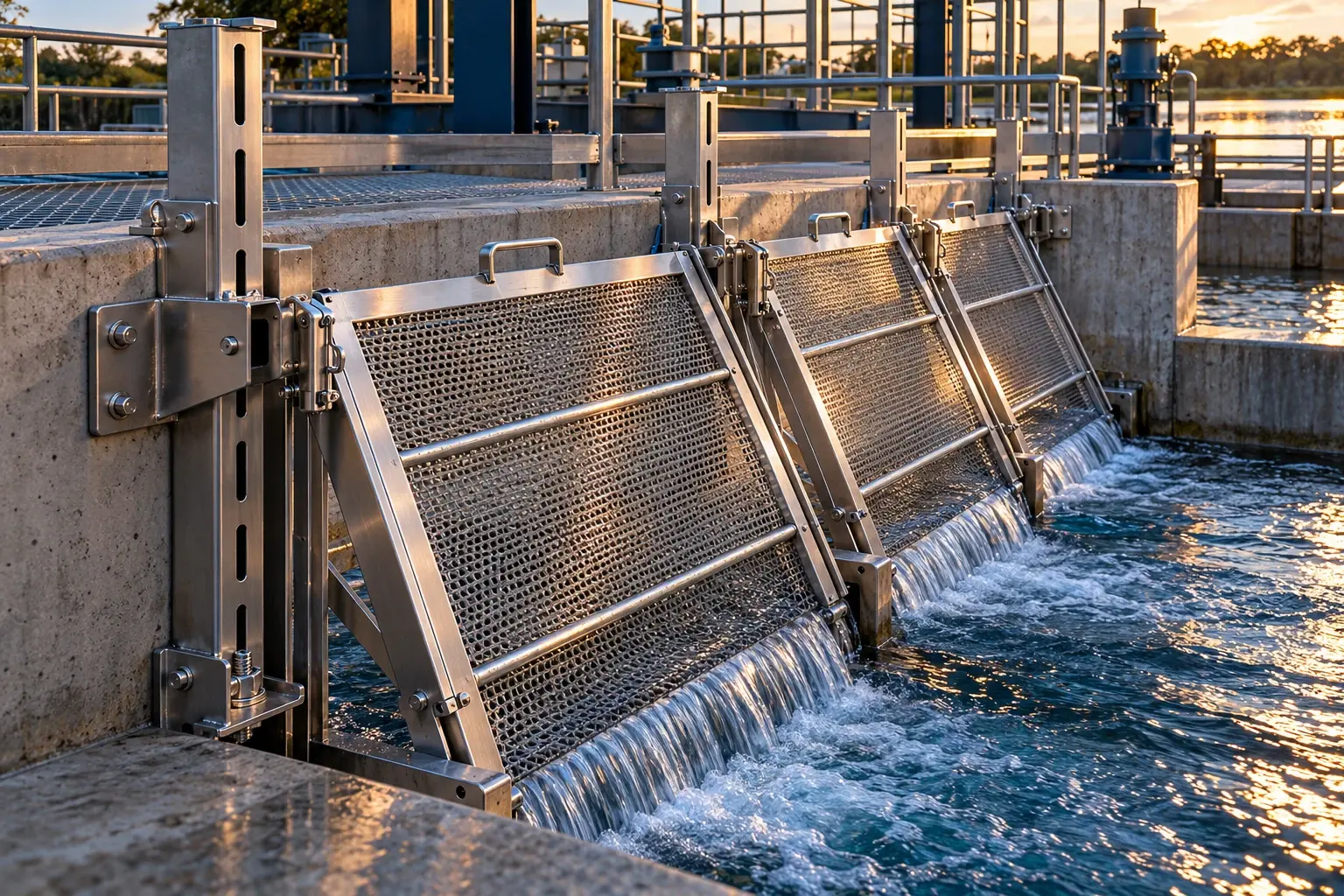
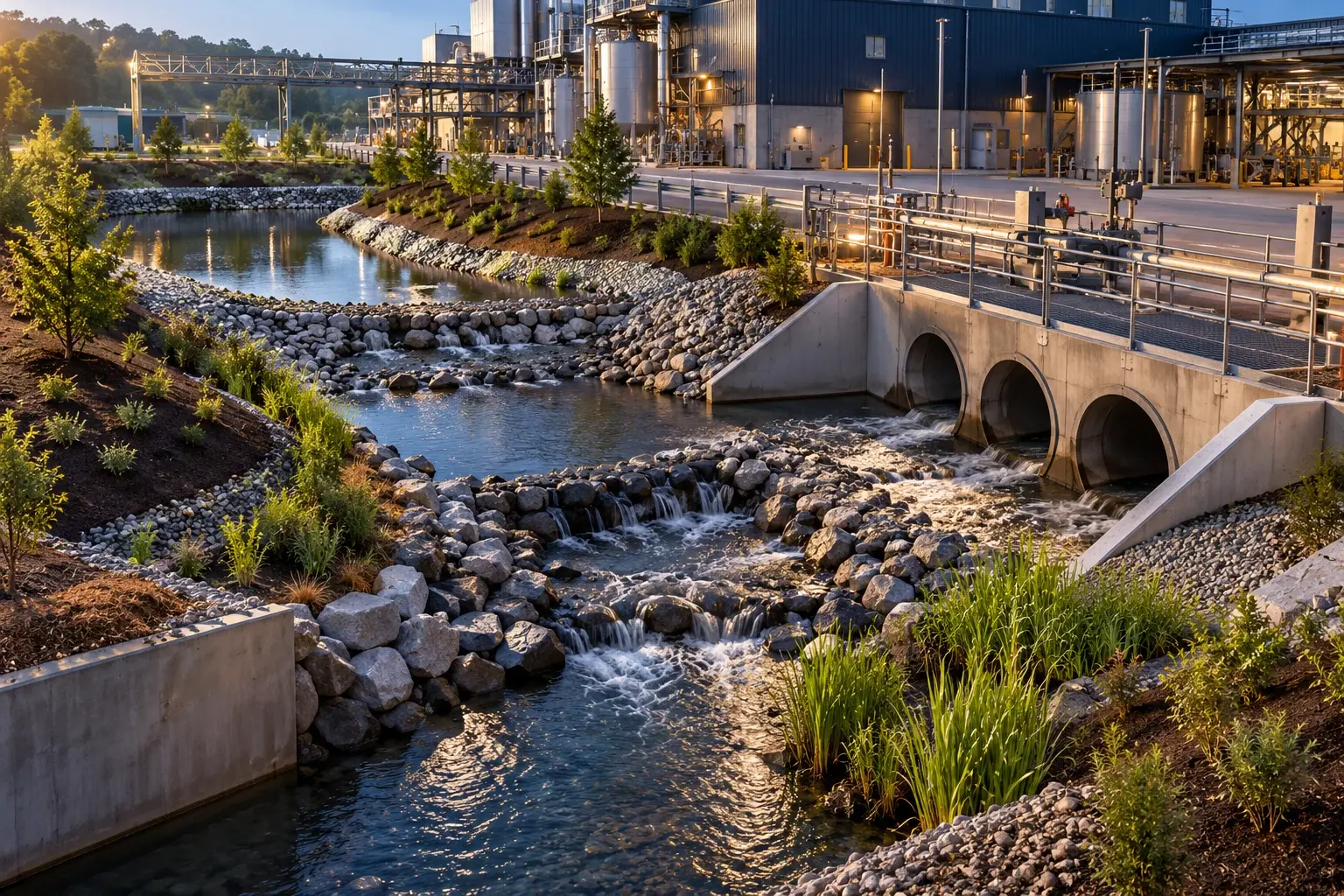
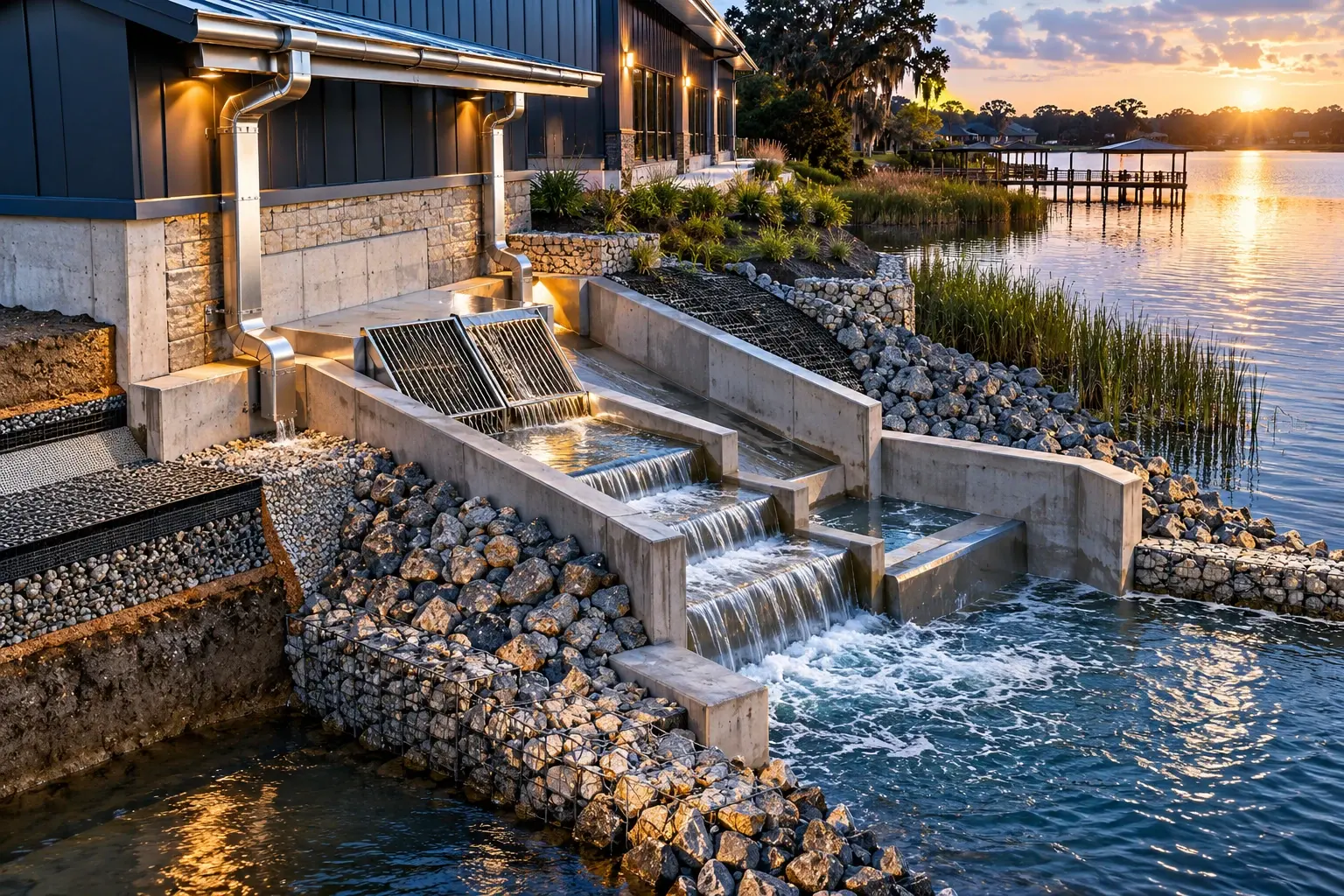
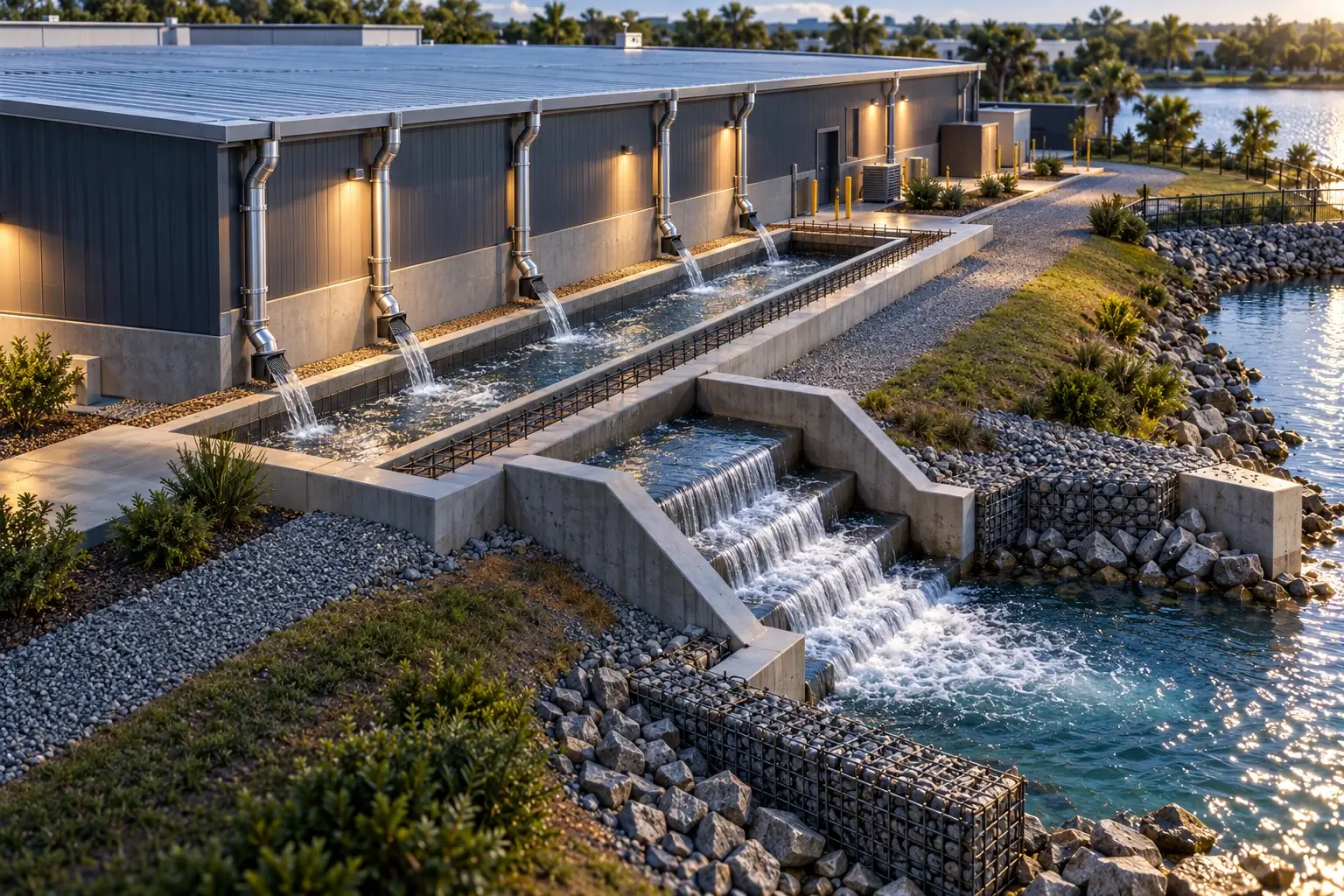
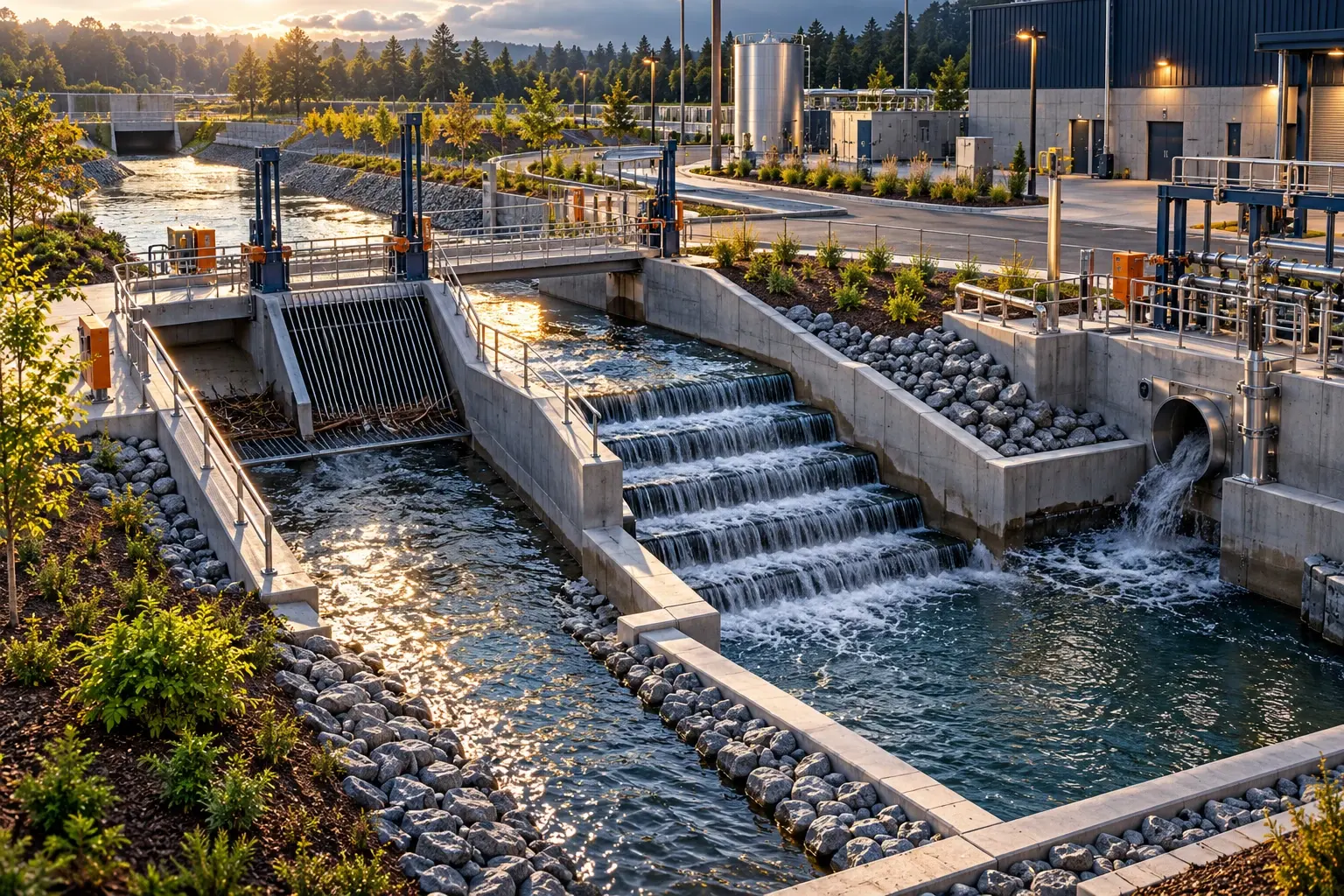
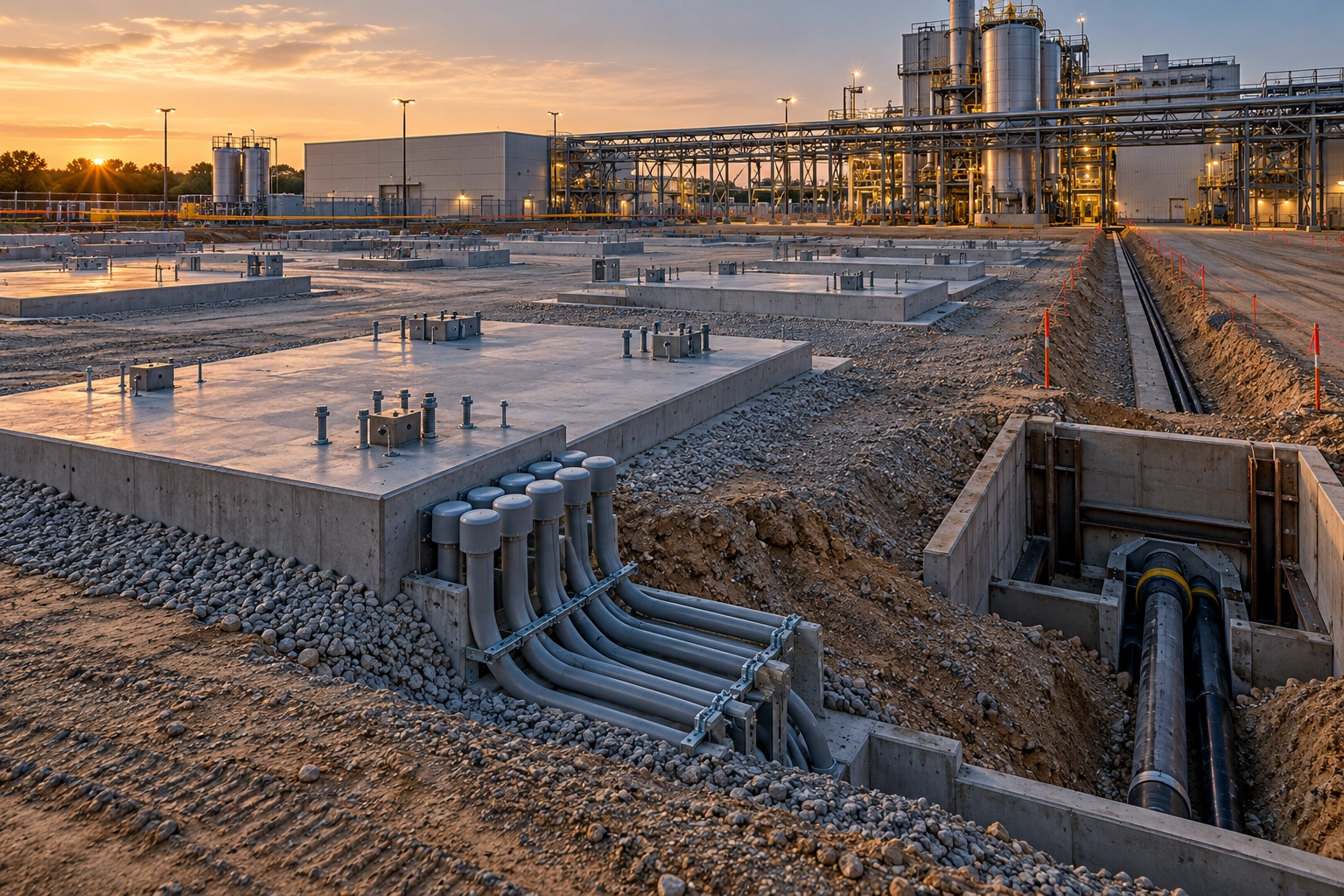
Developed the reinforced channel, debris screens, five-step weir, outlet basin and stabilization scope. Curbing, grading, landscaping and wastewater-collection interfaces were coordinated with the work. The system reduced sediment carry by more than 90 percent while providing a maintainable runoff path.
Reduce erosion and stormwater exposure through reinforced drainage paths and step-down weirs.
Civil and Structural, Drainage and Stormwater Systems
Full lifecycle project ownership
Owned the full project lifecycle: capital planning and prioritization, need definition, feasibility and scope development, engineering and AFE justification, procurement and vendor coordination, construction sequencing and field oversight, commissioning, turnover, and post-startup support. Connected operating requirements with technical scope, funding decisions, execution readiness, and the needs of operations and maintenance.
Capital Strategy and Business Alignment
Engineering practice and documented application
Project Lifecycle, FEL, and Execution Models
Engineering practice and documented application
Action
Applies capabilities

Scheduling, Shutdowns, and Execution Sequencing
Engineering practice and documented application
TSK-001050 · Quantity development
Site Enhancement Initiative
Recorded application
Estimating, Financial Control, and Expense Traceability
Engineering practice and documented application
Procurement, Contracts, and Supplier Coordination
Engineering practice and documented application
TSK-000054 · Action
Erosion Remediation and Rainwater Management

TSK-000926 · Action
Drainage and Erosion-Control Project Overview
Recorded applicationTSK-001050 · Quantity development
Site Enhancement Initiative
Recorded applicationEstimating, Financial Control, and Expense Traceability
Engineering practice and documented application
Scheduling, Shutdowns, and Execution Sequencing
Engineering practice and documented application
TSK-000926 · Action
Drainage and Erosion-Control Project Overview
Recorded applicationTSK-001050 · Quantity development
Site Enhancement Initiative
Recorded applicationOwned capital planning and the full delivery lifecycle. The cards connect the applicable responsibilities with the recorded work.
Capital Strategy and Business Alignment
Engineering practice and documented application
Project Lifecycle, FEL, and Execution Models
Engineering practice and documented application
Estimating, Financial Control, and Expense Traceability
Engineering practice and documented application
Scheduling, Shutdowns, and Execution Sequencing
Engineering practice and documented application
Procurement, Contracts, and Supplier Coordination
Engineering practice and documented application
Action
Applies capabilities

Risk, Uncertainty, and Decision Support
Engineering practice and documented application
Risk, Uncertainty, and Decision Support
Engineering practice and documented application
Risk, Uncertainty, and Decision Support
Engineering practice and documented application

Statistical Quality, Measurement Systems, and Sampling
Academic preparation and analytical method

Optimization and Operations Research
Academic preparation and analytical method
Optimization and Operations Research
Academic preparation and analytical method

Forecasting, Inventory, Supply Chain, and Logistics
Academic preparation and analytical method
Forecasting, Inventory, Supply Chain, and Logistics
Academic preparation and analytical method
Stochastic Models and Uncertainty Analytics
Academic preparation and analytical method
Stochastic Models and Uncertainty Analytics
Academic preparation and analytical method
Lean Six Sigma, Quality Systems, and Governance Maturity
Engineering practice and documented application

Thermal/Hydraulic Analysis and Engineering-Calculation Review
Engineering practice and documented application
Thermal/Hydraulic Analysis and Engineering-Calculation Review
Engineering practice and documented application
Optimization and Operations Research
Academic preparation and analytical method
Optimization and Operations Research
Academic preparation and analytical method
Civil, Structural, Concrete, and Site Engineering
Engineering practice and documented application
Civil, Structural, Concrete, and Site Engineering
Engineering practice and documented application
Civil, Structural, Concrete, and Site Engineering
Engineering practice and documented application
Civil, Structural, Concrete, and Site Engineering
Engineering practice and documented application
Civil, Structural, Concrete, and Site Engineering
Engineering practice and documented application
Stormwater, Drainage, and Erosion Control
Engineering practice and documented application
Stormwater, Drainage, and Erosion Control
Engineering practice and documented application
Stormwater, Drainage, and Erosion Control
Engineering practice and documented application
Stormwater, Drainage, and Erosion Control
Engineering practice and documented application
Stormwater, Drainage, and Erosion Control
Engineering practice and documented application
Stormwater, Drainage, and Erosion Control
Engineering practice and documented application
Site Access, Traffic, and Exterior Improvements
Engineering practice and documented application
Site Access, Traffic, and Exterior Improvements
Engineering practice and documented application
Site Access, Traffic, and Exterior Improvements
Engineering practice and documented application
Site Access, Traffic, and Exterior Improvements
Engineering practice and documented application
Site Access, Traffic, and Exterior Improvements
Engineering practice and documented application
TSK-000054 · Action
Erosion Remediation and Rainwater Management
TSK-000055 · Method
Erosion Remediation and Rainwater Management
TSK-000056 · Action
Civil and Hydraulic Design Detail
Recorded applicationTSK-000057 · Method
Civil and Hydraulic Design Detail
Recorded applicationTSK-000331 · Method
Tank-Slab Drainage and Weir-System Engineering
TSK-000332 · Method
Full Drainage Channel & Weir System
Recorded applicationTSK-000333 · Method
Gutter Replacement
Recorded applicationTSK-000334 · Method
Phase 1 Drainage Remediation
Recorded applicationTSK-000335 · Method
Site Readiness and Erosion Control
Recorded applicationTSK-000336 · Action
Site Enhancement Initiative
Recorded applicationTSK-000337 · Method
Site Enhancement Initiative
Recorded applicationTSK-000358 · Action
Drainage, Weir and Debris-Screen Design Details
TSK-000359 · Action
Drainage, Weir and Debris-Screen Design Details
TSK-000361 · Technical scope
Drainage, Weir and Debris-Screen Design Details
TSK-000362 · Technical scope
Drainage, Weir and Debris-Screen Design Details
TSK-000364 · Technical scope
Drainage, Weir and Debris-Screen Design Details
TSK-000365 · Technical scope
Drainage, Weir and Debris-Screen Design Details
TSK-000366 · Technical scope
Drainage, Weir and Debris-Screen Design Details
TSK-000367 · Technical scope
Drainage, Weir and Debris-Screen Design Details
TSK-000368 · Technical scope
Drainage, Weir and Debris-Screen Design Details
TSK-000369 · Technical scope
Drainage, Weir and Debris-Screen Design Details
TSK-000370 · Technical scope
Drainage, Weir and Debris-Screen Design Details
TSK-000371 · Technical scope
Drainage, Weir and Debris-Screen Design Details

TSK-000372 · Technical scope
Drainage, Weir and Debris-Screen Design Details
TSK-000373 · Technical scope
Drainage, Weir and Debris-Screen Design Details
TSK-000374 · Technical scope
Drainage, Weir and Debris-Screen Design Details
TSK-000375 · Technical scope
Drainage, Weir and Debris-Screen Design Details
TSK-000376 · Method
Drainage, Weir and Debris-Screen Design Details
TSK-000377 · Action
Removable Debris Screen System
Recorded application
TSK-000378 · Method
Removable Debris Screen System
Recorded applicationTSK-000380 · Technical context
Drainage and Erosion-Control Project Overview
TSK-000925 · Action
Drainage and Erosion-Control Project Overview
Recorded applicationTSK-000926 · Action
Drainage and Erosion-Control Project Overview
Recorded application
TSK-000927 · Action
Drainage and Erosion-Control Project Overview
Recorded applicationTSK-001050 · Quantity development
Site Enhancement Initiative
Recorded applicationTSK-001067 · Engineering scope
Drainage, Weir and Debris-Screen Design Details
Process-side separation and recovery reduced product loss and the load reaching wastewater. Environmental work also included runoff and sediment control, vapor exposure mitigation and acetator emissions capture. Connected these requirements with production continuity, equipment interfaces and maintainable safeguards.
Facility work covered enclosure rehabilitation, ventilation, drainage, erosion control and electrical-room protection. Scopes brought together access, scaffolding, structural and civil interfaces, weather barriers, ductwork, fans, electrical feeds and interlocks. Coordinated the disciplines around the operating needs of the facility.
Civil, Structural, Concrete, and Site Engineering
Engineering practice and documented application
Civil, Structural, Concrete, and Site Engineering
Engineering practice and documented application
Civil, Structural, Concrete, and Site Engineering
Engineering practice and documented application
Civil, Structural, Concrete, and Site Engineering
Engineering practice and documented application
Civil, Structural, Concrete, and Site Engineering
Engineering practice and documented application
Stormwater, Drainage, and Erosion Control
Engineering practice and documented application
Stormwater, Drainage, and Erosion Control
Engineering practice and documented application
Stormwater, Drainage, and Erosion Control
Engineering practice and documented application
Stormwater, Drainage, and Erosion Control
Engineering practice and documented application
Stormwater, Drainage, and Erosion Control
Engineering practice and documented application
Stormwater, Drainage, and Erosion Control
Engineering practice and documented application
Site Access, Traffic, and Exterior Improvements
Engineering practice and documented application
Site Access, Traffic, and Exterior Improvements
Engineering practice and documented application
Site Access, Traffic, and Exterior Improvements
Engineering practice and documented application
Site Access, Traffic, and Exterior Improvements
Engineering practice and documented application
Site Access, Traffic, and Exterior Improvements
Engineering practice and documented application
Action
Applies capabilities
Engineering scope
Applies capabilities
Developed reinforced-drainage and step-down-weir measures to mitigate erosion and stormwater risk. A cited benefit of more than 90% sediment reduction remains unverified field performance.
PRJ-A-033 | Site Enhancements, Drainage Erosion Mitigation, and Runoff Controls | classification ASEPTIC_OR_HYGIENIC_PRODUCT_PROCESSING
Use drainage inspections and, after construction where measurements exist, storm-event sediment or turbidity comparisons to test the drainage design.
Civil / Site.
Workstream scope alignment, capital authorization, risk-register review, QA/QC and commissioning planning.
TSK-000331 · Method
Tank-Slab Drainage and Weir-System Engineering
TSK-000332 · Method
Full Drainage Channel & Weir System
TSK-000333 · Method
Gutter Replacement
TSK-000334 · Method
Phase 1 Drainage Remediation
TSK-000335 · Method
Site Readiness and Erosion Control
TSK-000336 · Action
Site Enhancement Initiative
TSK-000337 · Method
Site Enhancement Initiative
TSK-000358 · Action
Drainage, Weir and Debris-Screen Design Details
TSK-000359 · Action
Drainage, Weir and Debris-Screen Design Details
TSK-000361 · Technical scope
Drainage, Weir and Debris-Screen Design Details
TSK-000362 · Technical scope
Drainage, Weir and Debris-Screen Design Details
TSK-000364 · Technical scope
Drainage, Weir and Debris-Screen Design Details
TSK-000365 · Technical scope
Drainage, Weir and Debris-Screen Design Details
TSK-000366 · Technical scope
Drainage, Weir and Debris-Screen Design Details
TSK-000367 · Technical scope
Drainage, Weir and Debris-Screen Design Details
TSK-000368 · Technical scope
Drainage, Weir and Debris-Screen Design Details
TSK-000369 · Technical scope
Drainage, Weir and Debris-Screen Design Details
TSK-000370 · Technical scope
Drainage, Weir and Debris-Screen Design Details
TSK-000371 · Technical scope
Drainage, Weir and Debris-Screen Design Details
TSK-000372 · Technical scope
Drainage, Weir and Debris-Screen Design Details
TSK-000373 · Technical scope
Drainage, Weir and Debris-Screen Design Details
TSK-000374 · Technical scope
Drainage, Weir and Debris-Screen Design Details
TSK-000375 · Technical scope
Drainage, Weir and Debris-Screen Design Details
TSK-000376 · Method
Drainage, Weir and Debris-Screen Design Details
TSK-000377 · Action
Removable Debris Screen System
TSK-000378 · Method
Removable Debris Screen System
TSK-000380 · Technical context
Drainage and Erosion-Control Project Overview
TSK-000054 · Action
Erosion Remediation and Rainwater Management
TSK-000055 · Method
Erosion Remediation and Rainwater Management
TSK-000056 · Action
Civil and Hydraulic Design Detail
TSK-000057 · Method
Civil and Hydraulic Design Detail
TSK-000925 · Action
Drainage and Erosion-Control Project Overview
TSK-000926 · Action
Drainage and Erosion-Control Project Overview
TSK-000927 · Action
Drainage and Erosion-Control Project Overview
TSK-001050 · Quantity development
Site Enhancement Initiative
TSK-001067 · Engineering scope
Drainage, Weir and Debris-Screen Design Details
Workstream Portfolio Rollup
5,695,000 USD
Environmental Compliance and Recovery Systems
Recorded workstream portfolio reference. This is the workstream-level value and is not a project expenditure or a new total of reassigned projects.
| Measure or outcome | Value or result | Meaning and operating scope |
|---|---|---|
| Recorded outcome | The hydraulic design used 545 GPM and a 4% channel slope. | Drainage and Erosion-Control Project Overview |
| Recorded outcome | The site package scoped 1,350 linear ft of curbing and 45 parking stops. | Drainage and Erosion-Control Project Overview |
| Recorded outcome | The scope covers hydraulic design, drainage planning and site-remediation specifications. | Drainage and Erosion-Control Project Overview |
CASE-122 · Engineering case
Engineered a complete stormwater, erosion-control, and drainage platform for the tank slab.
Read the Case ↗CASE-123 · Engineering case
Designed a reinforced concrete drainage channel and step-down weir system for controlled stormwater flow.
Read the Case ↗CASE-124 · Engineering case
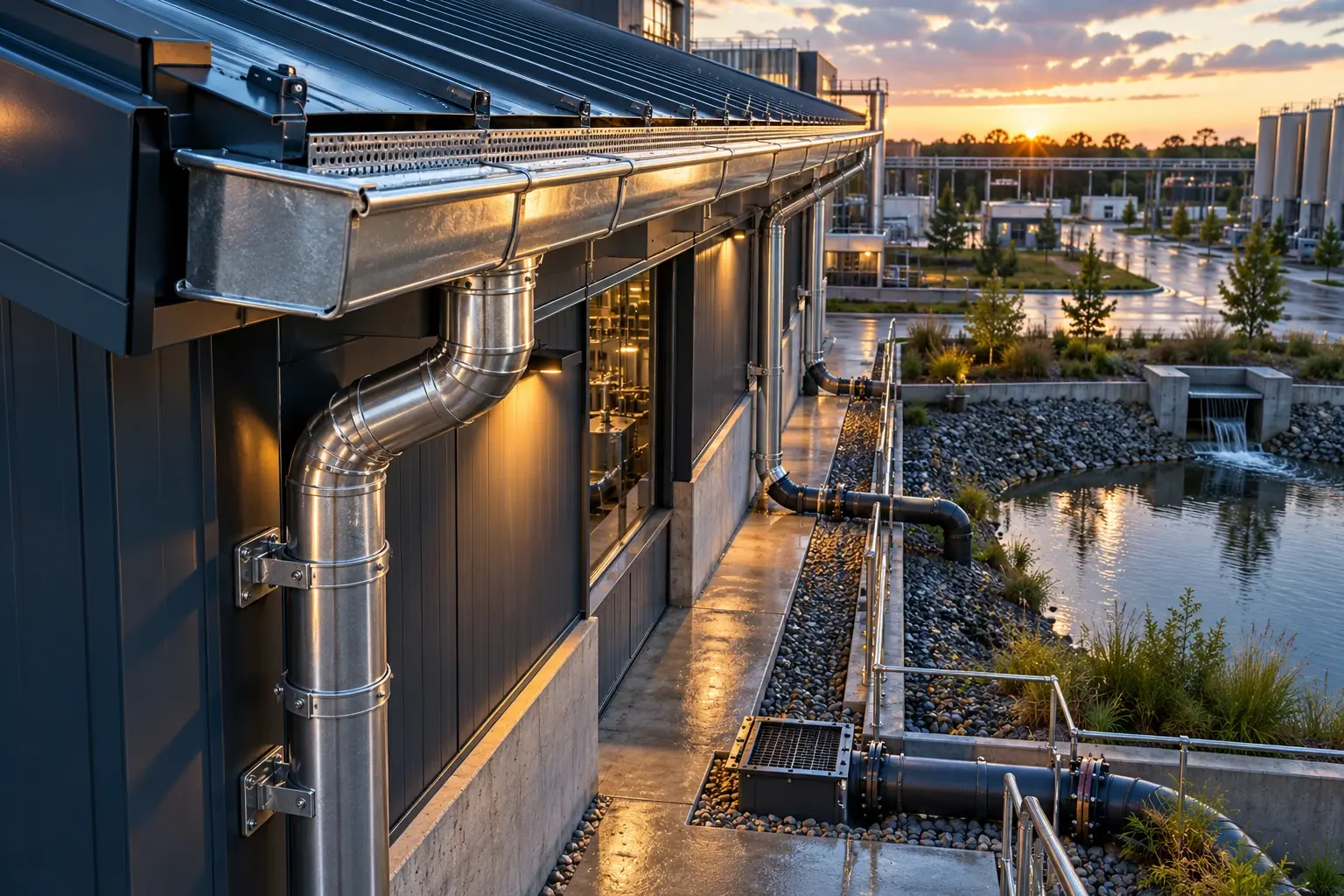
Designed stainless-gutter and downspout replacement to address undersized and corroded roof drainage within the stormwater-control scope.
Read the Case ↗CASE-125 · Engineering case
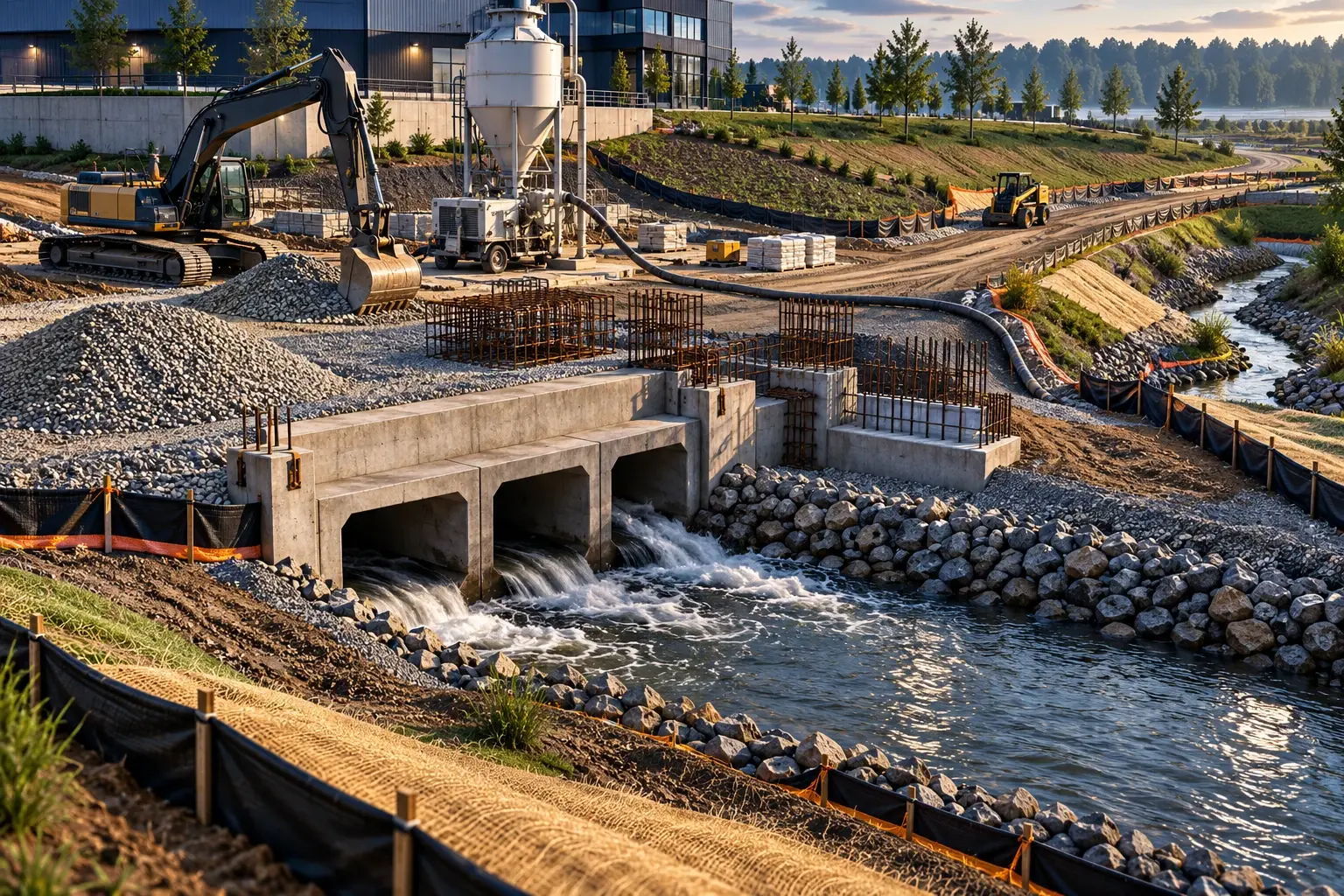
Defined Phase 1 stabilization of the exposed tank-pad area before full drainage-channel construction.
Read the Case ↗CASE-126 · Engineering case
Managed erosion and runoff risk during equipment delivery and early construction readiness.
Read the Case ↗CASE-127 · Engineering case
Scoped site improvements across parking, drainage, curbing, plant beds, ADA access, signage, and weekend execution constraints.
Read the Case ↗CASE-129 · Engineering case
Engineered drainage, erosion-control, stabilization and site-improvement scope for an operating facility.
Read the Case ↗CASE-130 · Engineering case
Designed removable stainless debris screens to reduce clogging risk in a narrow reinforced drainage channel.
Read the Case ↗CASE-132 · Engineering case
Engineered drainage, erosion-control, stabilization and site-improvement scope for an operating facility.
Read the Case ↗CASE-032 · Engineering case
Converted a severe roof-runoff and slab-void problem into a civil / hydraulic stormwater-control design.
Read the Case ↗CASE-033 · Engineering case
Built a detailed civil and hydraulic design basis for roof runoff, channel flow, debris management, weir dissipation, and outlet control.
Read the Case ↗Related facility implementations are part of this project. Their operating conditions, equipment and interfaces are considered within the same project lifecycle.